
Why Most Parents of PDA, Autistic Kids Feel Like They Are Not Good Enough

**You can also listen to this in audio format only on The Regulated Mother Podcast on Apple or Spotify. Look for Episode #39
**Below is the blog article for easy reading.
The Belief That’s Quietly Undermining Your Parenting
There is a belief that quietly undermines your parenting.
And, I see so many parents of PDA, autistic, ADHD, or high-needs kids carrying this belief.
And that is…
“I’m not a good enough parent.”
And it’s not just because you may lose it sometimes on your child who triggers you a lot.
But it’s also because you’re a parent who does so much to help your child function better in life…. Researching, learning, accommodating, adjusting your whole life around your child…
And yet it often feels like nothing is really working to help your child function better.
And then your brain quietly lands on:
“If this isn’t getting better… it must be me.”
This belief shows up in public moments…
When you compare yourself to other families…
And in those shame spiral moments after meltdowns where you think:
“I should be able to do this better.”
And over time…It stops feeling like a thought. And starts to feel like who you are.
But here’s the problem:
When you believe that…You stay stuck in the dysregulated pattern you’re trying so hard to get yourself out of. And it becomes almost impossible to feel calm, confident, or grounded as a parent, which you so desperately want to feel.
I get it – I was you.
So in this episode, I’m going to show you where the belief of “I’m not a good enough parent” actually comes from, why it’s important to challenge it, and how to start seeing yourself in a completely different way…so that you can show up more regulated, more grounded, and more like the parent you want to be for your child.
Chronically Triggered And “Failing”
There was a summer where my son became housebound and wouldn’t do anything.
He was at a point of burnout where his behaviors were becoming so extreme when we went out in public… that he himself stopped wanting to go out.
He stopped going to gymnastics — which he loved and which helped his behaviors so much.
He wouldn’t even go for walks.
I wanted to keep him moving.
I knew how important that was for his brain, for his body, for everything.
He loved swimming…
But we could no longer go to the neighbour’s pool when they were away, because we never knew who else might show up — and that unpredictability would trigger him into extreme behaviors.
So I decided to spend a lot of money building an above-ground pool in our backyard.
I felt like I had to do something.
Anything.
To keep him going outside…
To keep him exercising…
To help his brain.
I always felt so much responsibility to keep trying, to keep searching for answers, to do anything — even spend money we didn’t have — to help my child function better.
So we had the pool built.
But my son didn’t want to go into it.
I tried and tried…
And then I would get so upset with him.
I spent all this money.
I did all this work to get this pool installed — because he said he would use it.
Eventually, I got him to go in… sometimes.
And then one day we were in the pool, and the neighbours were in their pool with people over — making a lot of noise.
My son started swearing at them.
Really loud.
They could hear.
I remember just cringing…
Wanting to sink into the water and disappear.
I didn’t want to deal with this.
At the time, we lived in a neighbourhood that was very “respectable”… and “affluent”…
And you never heard anyone yelling or being rude.
I tried to support my son in the moment, but mostly I just stayed quiet…
And then later went over to the neighbours to apologize and explain things.
They were understanding.
But inside me… a shame spiral had already started.
I felt like I wasn’t a good enough parent.
Because I couldn’t control my child.
Because I couldn’t teach him to behave in a more “respectable” way.
Later that evening, my son escalated again over something small.
And I lost it.
I had held it together all day…
Managed everything…
And that night… it was like the tipping point.
I felt so much anger.
So much resentment.
And underneath it… this painful thought:
He is ruining my life.
The next morning, I woke up in what I call a shame hangover.
I felt awful for yelling.
Awful for the thoughts I had.
And completely consumed by the belief:
I am not a good enough parent for him.
I am failing him.
Why This Feeling Is So Common
This is what I see so many parents go through.
And this is the reality of parenting a PDA, autistic, ADHD, or high-needs child.
It feels like you can never win.
Everywhere you turn… there is triggering.
There are so many chances to “fail” at what you believe a good enough parent should be.
You feel like:
- You can’t help your child function the way you think they should
- You can’t control your own reactions all the time
- And no matter how hard you try… it doesn’t feel like enough
So your nervous system — after being pushed again and again and again — comes to one painful conclusion:
“I’m not a good enough parent.”
But this belief…
It doesn’t come from truth.
It comes from conditioning.
From programming.
From deeply ingrained ideas of what a “good parent” is supposed to look like.
And if we don’t question these beliefs…
We will stay stuck in dysregulation.
We will stay in shame.
And over time… we may even start to feel resentment toward our child —
like we cannot be successful in life because of them…
like they are ruining our life.
So I want to walk you through why you feel this way…
And then gently invite you into new reframes that are actually aligned with the truth of parenting a high-needs child.
The Main Reasons You Feel Like You’re Not a Good Enough Parent
So now that we understand how common this experience is…
I want to walk you through the main reasons why you feel this way.
And as I go through these, I want you to just notice which ones land for you…
Because for most parents, it’s not just one — it’s many of these layered together.
1. You feel ashamed of your own reactions
You feel bad, guilty, or ashamed that you get frustrated, angry, or lose it on your child sometimes.
You know your child has a disability or more unique needs. You are trying so hard to step into reframes — that their behavior is communication, that it means they don’t feel safe. But at the same time, your mind still sees it through old conditioning that tells you they are being bad, wrong, purposeful, or willful.
And this creates an internal conflict.
Because on one hand, you know better.
But in the moment… you can’t always do better.
And that gap between what you know and how your body’s reaction takes you over… becomes a huge source of shame.
Your nervous system is being activated over and over again throughout the day. It gets taxed, overloaded, and pushed into a chronic stress state. And when that happens, you start holding in a lot of activation.
So you move into patterns like:
holding it in… holding it in… holding it in… and then blowing.
Or shutting down, disconnecting, and wanting to give up.
And afterward, the shame comes in.
You tell yourself:
“I should be more calm.”
“I should be more patient.”
“I should be able to handle this better.”
But what’s often missed here is that this is not a willpower issue.
This is a capacity issue.
When your nervous system is overloaded, you actually lose access to the parts of your brain that help you stay regulated, patient, and connected. So it doesn’t just feel like you’re struggling… it starts to feel like something is wrong with you.
Like this is who you are.
And that’s where this turns into identity-level shame:
“I’m just not a good enough parent.”
2. You feel like you’re not doing enough
Another major reason you feel this way is because you feel like you’re not doing enough for your child.
The reality is, your child resists demands. They don’t want responsibility. They get overwhelmed by life — which on the surface can look like defiance, laziness, or aggressive, purposeful, willful behavior. But underneath, they are struggling deeply to meet life’s demands.
And you are trying so many things to help them develop skills and function better.
But a lot of what you try… doesn’t work the way you hoped.
And this creates this constant question in your mind:
“What am I doing wrong?”
“What else should I be doing?”
“I need to keep searching.”
At the same time, your child needs so much from you.
More attention.
More co-regulation.
More energy.
More patience.
More attunement.
And you are giving so much.
But because your efforts are not showing the results your brain expects… it still feels like:
“I’m not doing enough.”
And underneath this is another layer that often isn’t spoken about enough.
You don’t just feel responsible for what you’re doing today.
You feel responsible for your child’s future.
For whether they will be able to function in life.
For whether they will be independent.
For whether they will be okay.
So when things aren’t improving in the way you expected… it doesn’t just feel like you’re falling short in the moment.
It feels like:
“I am failing their entire life.”
And that is an enormous weight to carry.
On top of that, so much of what you are doing is invisible.
You are constantly adjusting, preventing escalations, co-regulating, thinking ahead, managing environments — but none of that is visible in a way that shows clear “success.”
So it can feel like:
“I’m doing everything… and nothing is working.”
Which reinforces that belief:
“I’m not enough.”
3. You feel responsible for their behavior in public
Another reason this hits so deeply is because of what happens in public.
When your child has outbursts in public — due to overwhelm, pressure, demands, or sensory overload — it feels like you are a bad parent for not being able to control your child.
There is a deeply ingrained belief that most of us carry:
your child’s behavior equals how good of a parent you are.
And also:
you are responsible for your child behaving well.
But underneath that, there are even deeper beliefs.
That this kind of behavior is unacceptable.
That it is judged.
That it is shunned by society.
That something is wrong if this is happening.
And these beliefs live in all of us.
So when your child explodes in public, it doesn’t just feel uncomfortable.
It activates the part of your nervous system that is wired for belonging.
And suddenly, it feels like:
“We are going to be judged.”
“We are going to be rejected.”
“We are going to be outcasted.”
And so you react… or you freeze… or you try to manage the situation as best you can.
But afterward, the shame comes in again.
And you land in:
“I’m not a good enough parent.”
4. You have very human negative thoughts and feelings about your child — and feel ashamed of them
Another reason parents feel this way is because of the thoughts and feelings they have about their child.
You find yourself getting irritated.
Agitated.
Overstimulated.
Their voice, their behaviors, the constant needs… it can overwhelm your nervous system.
And then there are the thoughts that come in.
Thoughts like:
“I want to run away.”
“I wish I never had kids.”
“They are ruining my life.”
Or moments where you feel deep resentment.
Or even a part of you that feels like it hates how difficult this is.
And then immediately… shame.
Because you believe you should feel unconditional love and full acceptance at all times.
But what’s important to understand here is that your nervous system state drives your story.
When you are in chronic stress, your brain moves into a negativity bias. It will generate negative thoughts and emotions toward the very thing that is stressing your system the most.
It will activate fight or flight.
Wanting to escape.
Wanting to get away.
Wanting relief.
This is what your survival system is designed to do.
And how intense this feels is often connected to your own past traumas — your own unmet needs, your own experiences of not being able to fight, flee, or express yourself.
But these thoughts and feelings are not your truth.
They are your nervous system in a state.
And when you don’t understand that… you identify with them.
And then you make it mean:
“I’m a bad parent.”
5. You feel like you’re failing your other children too
Another layer of this is what happens when you have more than one child.
You feel responsible for protecting all of your children.
And yet, you often feel stuck in an impossible internal bind.
One child has high needs, intense behaviors, and requires so much of you.
The other children are impacted by it.
They may not get as much time, energy, or attention.
They may get hurt.
They may feel the effects of the environment.
And no matter what you do, it feels like someone’s needs are not being met.
So you tell yourself:
“I should be able to handle this in a way that satisfies everyone.”
“I should be able to do this better.”
And again, you land in:
“I’m failing all of my kids.”
At the same time, you feel guilt for giving more time and energy to the child with high needs.
And guilt for not giving enough to the others.
And this creates a constant internal pressure that has no real resolution.
Because the expectation itself is not realistic.
But it still feels like:
“I should be able to do more.”
6. You are constantly comparing — even if you don’t realize it
And the last piece I want to name, because it’s such a quiet but powerful driver of this feeling…
Is comparison.
Even if you’re not consciously comparing yourself…
Your nervous system is constantly taking in information from the world around you.
Other kids.
Other families.
Social media.
School environments.
Societal expectations.
And it’s registering:
“They’re doing it differently.”
“They’re doing it better.”
“Their kids are okay.”
“Why isn’t mine?”
Or even:
“Why can they handle this and I can’t?”
And this creates a constant internal message of:
“We are behind.
We are different.
We are not enough.”
And over time, that gets internalized.
Not just as a circumstance…
But as an identity.
Seeing This Through a New Lens
So when you put all of this together…
The nervous system overload,
the conditioning,
the expectations,
the comparison,
the responsibility…
It makes complete sense why you feel like you are not a good enough parent.
But here’s the truth.
The way you are measuring yourself right now…Is based on standards that were never designed for this kind of parenting.
So if we don’t update the frame through which you see yourself…You will continue to feel like you are failing.
Not because you are…But because the standard itself is misaligned.
And this is where it becomes so important to begin stepping into new reframes — ones that are more aligned with truth, that are life-affirming, and that support you in thriving and showing up as the regulated parent you want to be for your children.
The Reframes to Step Into
1. I am a good enough parent even if I get frustrated, angry, and lose it sometimes
What matters more is that I come back to connection and repair.
This reframe is so important.
All parents get frustrated and lose it sometimes. This is not what defines the child’s experience — unless it becomes verbally, physically, or emotionally harmful much of the time.
The nervous system learns regulation and resilience from connection and repair more than it does from never having any rupture.
So when the shame spiral happens, hold compassion for yourself.
You are carrying more than most.
You have a lot on your plate.
Allow yourself to see how much you do for your child.
Forgive yourself.
And move toward re-connection and repair — helping your child receive the message that the relationship is always stronger than any storm that came through.
And that you can take responsibility, and keep trying.
Because then… they learn this too.
2. I am doing enough for my child — even if I don’t see the results yet
This is a huge one.
We are not bad parents because our efforts don’t equal the outcomes we expect.
And yet, so many of us deeply believe this.
You can see it everywhere — parents wanting to show their child’s accomplishments so they can feel like they are doing enough.
But a child’s success does not define a parent’s worth.
This is where we got it all wrong.
A child — and a parent — are worthy and enough simply for being who they are.
And this is where it’s important to understand something that is often missed in this kind of parenting…
This is a long-term process.
You are not working with quick behavior changes or linear progress.
You are supporting a nervous system that needs more time, more safety, more co-regulation, and more capacity before change can naturally happen.
And that kind of development does not always show immediate results.
So when you don’t see change right away…
It doesn’t mean you are not doing enough.
It means the work you are doing is happening at a deeper level — in ways that are not always visible yet.
And this is where a big shift needs to happen internally.
You don’t have to keep doing more and more… just to finally feel like you are enough.
You don’t have to constantly search, push, or overextend yourself in order to prove your worth as a parent.
Because that is what leads to burnout.
Instead, this is an invitation to begin relating to this differently.
To trust that what you are doing matters — even if you don’t see it yet.
To allow your child’s timeline to be different.
And to begin separating your sense of “enoughness” from the outcomes you are seeing right now.
Because when you really take this in…
It creates a kind of freedom.
A deeper, more grounded kind of worth that is not dependent on outcomes.
And from that place…
You actually show up with more capacity, more presence, and more sustainability — which supports your child far more than constant over-efforting ever could.
3. I am worthy and enough even if my child behaves “badly” in public
My child’s behavior does not define my worth as a parent.
But believing that it does is one of the hardest beliefs to let go of.
Because we are wired to belong.
We are wired to not be outcasted.
But the system we live in is based on normative standards.
And our children are more sensitive.
They feel more.
They get stressed by more.
So how they behave in public is often not something we can fully control.
And when you can start to separate your worth from their behavior…
Their public meltdowns begin to feel like a moment of stress —
instead of a cringe-worthy shame spiral of not enoughness.
This is where you begin to reclaim your sense of self, separate from how your child behaves.
And that creates so much more regulation in your system…
And a deeper sense of confidence in knowing how to respond when those public moments happen.
4. I am a good enough parent even if I have negative thoughts and emotions about my child
This is a big understanding.
Your nervous system state drives your story.
Your state is not who you truly are.
When you are in chronic stress, your brain will generate negative thoughts and emotions toward your child — because they are the source of stress in your system.
It will activate fight and flight.
Wanting to run away.
Wanting relief.
Wanting escape.
This is what your survival system is designed to do.
But this is not your truth.
And when you can recognize this as a natural response of your nervous system…
You can begin to unblend from it, which is the process of being with it and seeing as a natural survival reaction that is not who you truly are.
You can have these very human reactions…
And still know that they do not define you.
5. I am a good enough parent even if I cannot meet all of my children’s needs all the time
This is where it can feel like you wish you could clone yourself.
Have more of you to go around.
But instead, you stretch yourself thin…
And then berate yourself when you can’t meet everyone’s needs.
This is not a realistic expectation.
You do the best you can.
And there is something important to begin reminding yourself here:
I am a good enough parent for my children because I am doing my best to support each of them, even when I have to move between their needs.
Because that is the reality.
You are moving between needs.
You are shifting your attention.
You are responding as best as you can in each moment.
Not perfectly.
But with care.
You focus on:
connection over perfection,
quality over quantity,
repair over getting it right all the time.
And this is where another deeper truth comes in:
I am a good enough parent for my children because I am showing up with care, meeting their needs over time, and repairing when I can’t meet everything in the moment.
Because needs are not meant to be met all at once.
They are met over time.
Across moments.
Through connection, rupture, and repair.
And there is another layer here that can be hard to take in…
But important.
Can this experience for your children… be a part of life?
Can this pain… be something that is allowed to exist?
Because no one goes through life without challenge.
And if you are providing love, care, and attunement overall…
Can it be okay that not everything is perfect?
Without defining yourself by it?
6. I am a good enough parent even if my path — and my child’s path — looks different from others
I do not need to compare my child, my parenting, or our life to anyone else’s in order to measure my worth.
This is a really important reframe.
Because comparison is happening all the time — even when you don’t realize it.
Your nervous system is constantly scanning:
other kids, other families, social media, school environments…
And it’s picking up:
“They’re doing better.”
“They’re further ahead.”
“They’re handling this more easily.”
And it creates this internal pressure that says:
“We are behind.
We should be further along.
Something is wrong.”
But what’s often not questioned is this:
Behind according to who?
According to what standard?
Most of the standards we are comparing ourselves to are based on normative development and normative nervous systems.
But your child is not operating from that template.
And that doesn’t mean something is wrong.
It means the path is different.
When you stay in comparison, you will always feel like you are falling short.
Because you are measuring a non-linear, highly individual journey against a linear, standardized one.
So the invitation here is to gently come out of comparison…
And come back into your own lane.
To trust that your child’s development does not have to follow society’s timeline.
To trust that growth can look different.
To trust that meaning, success, and fulfillment do not have to look like what you see around you.
And most importantly…
To stop using someone else’s path as the measure of your worth as a parent.
Because when you do that…
You will always lose.
But when you come back into your own experience…
You create space for something else:
Trust.
Relief.
And a different kind of confidence — one that is not dependent on keeping up.
When You Begin to See Yourself Differently
If you don’t question the beliefs you are holding about what makes a “good enough parent”…
You will continue to feel like you are failing.
Not because you are…
But because the standard you are measuring yourself against was never designed for this kind of parenting.
But when you begin to see through a different lens…
Something shifts.
Something softens.
There is a little more space.
A little more breath.
You begin to loosen the grip of the shame…
The pressure…
The constant feeling of not enoughness.
And you begin to see the truth more clearly.
You are not failing.
You are parenting in conditions that require more than most.
You are showing up in ways that stretch you, challenge you, and ask more of you than you ever imagined.
And even in the moments where it feels messy…
Where you lose it…
Where things don’t go the way you hoped…
That does not define you.
Because when you begin to look at your parenting through a more truthful lens…
You start to recognize something that was always there:
You have been showing up.
You have been trying.
You have been caring deeply.
And maybe…
Just maybe…
You have been a good enough parent all along.
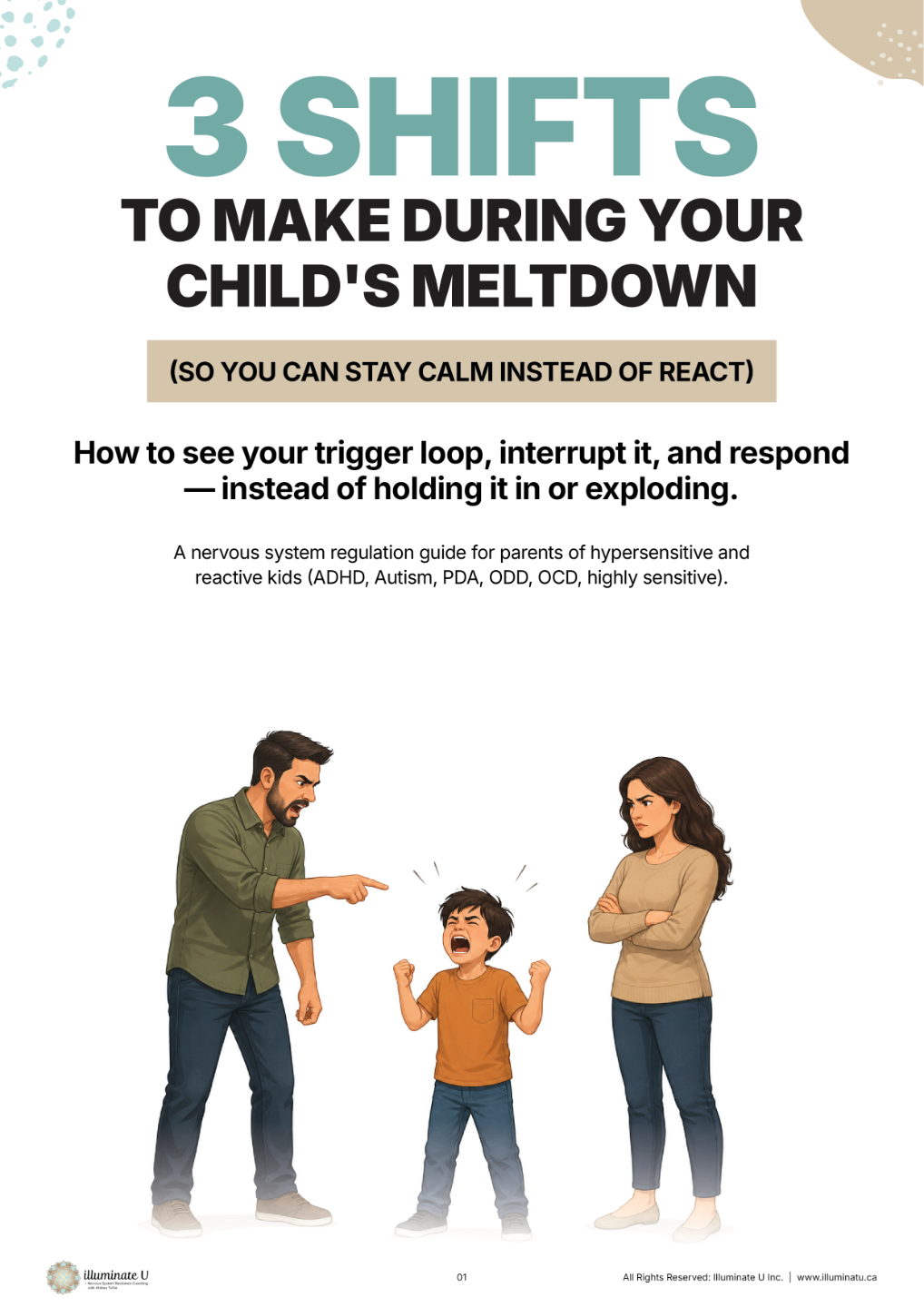
Free: The 3 Shifts Guide
The trigger loop and 3 patterns you get stuck in during meltdowns — and how to shift them so you can stay calm instead of react.
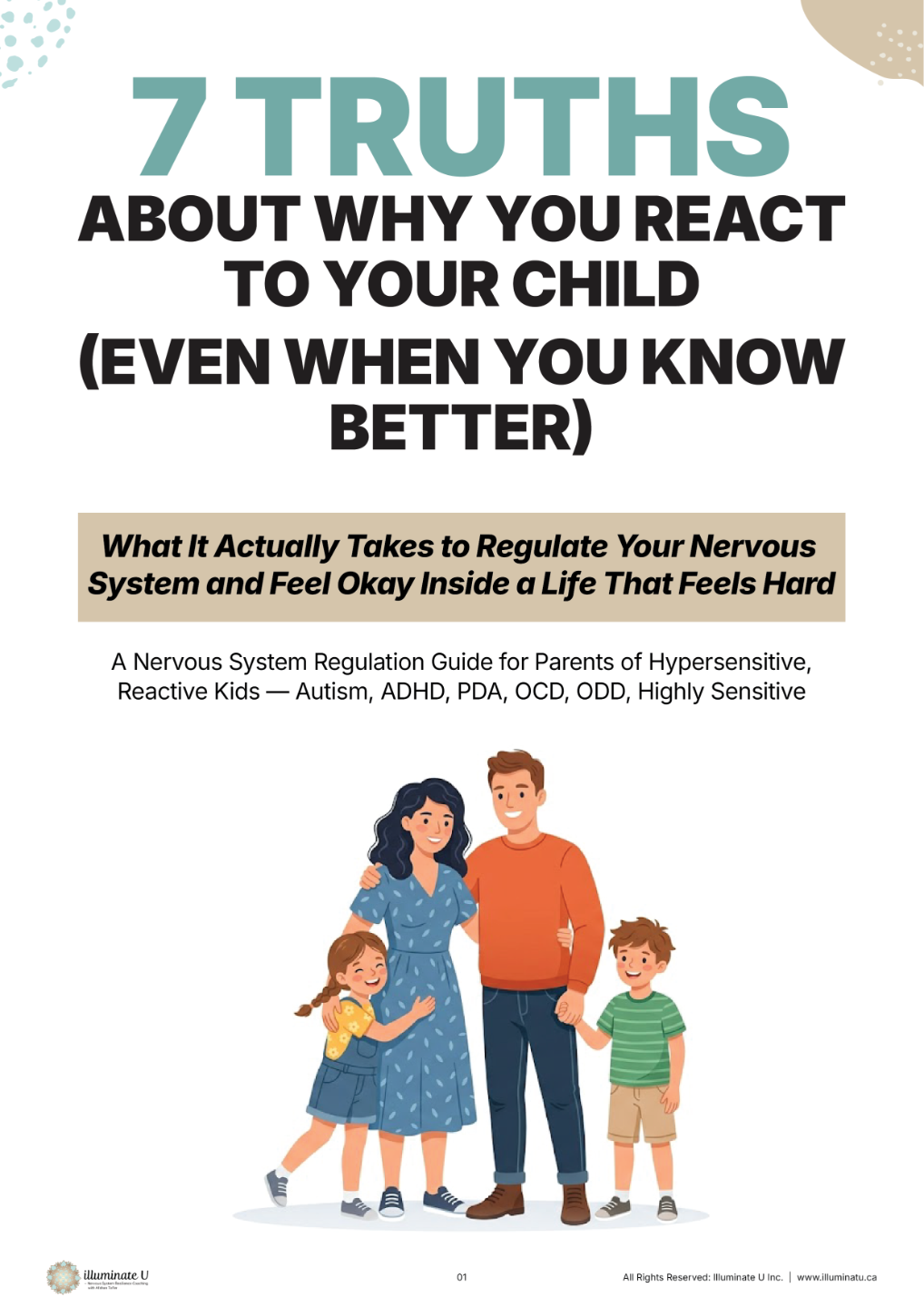
Free: 7 Truths About Why You React to Your Child Guide
Why you react even when you know better — the conditioning, nervous system states, hidden beliefs and patterns, and buried emotions running the show.

