
When Your Child Swears or Says Mean Things And It Stings
**You can also listen to this in audio format only on The Regulated Mother Podcast on Apple or Spotify. Look for Episode #41
If Your Child’s Words Have Ever Cut You… Stay With Me
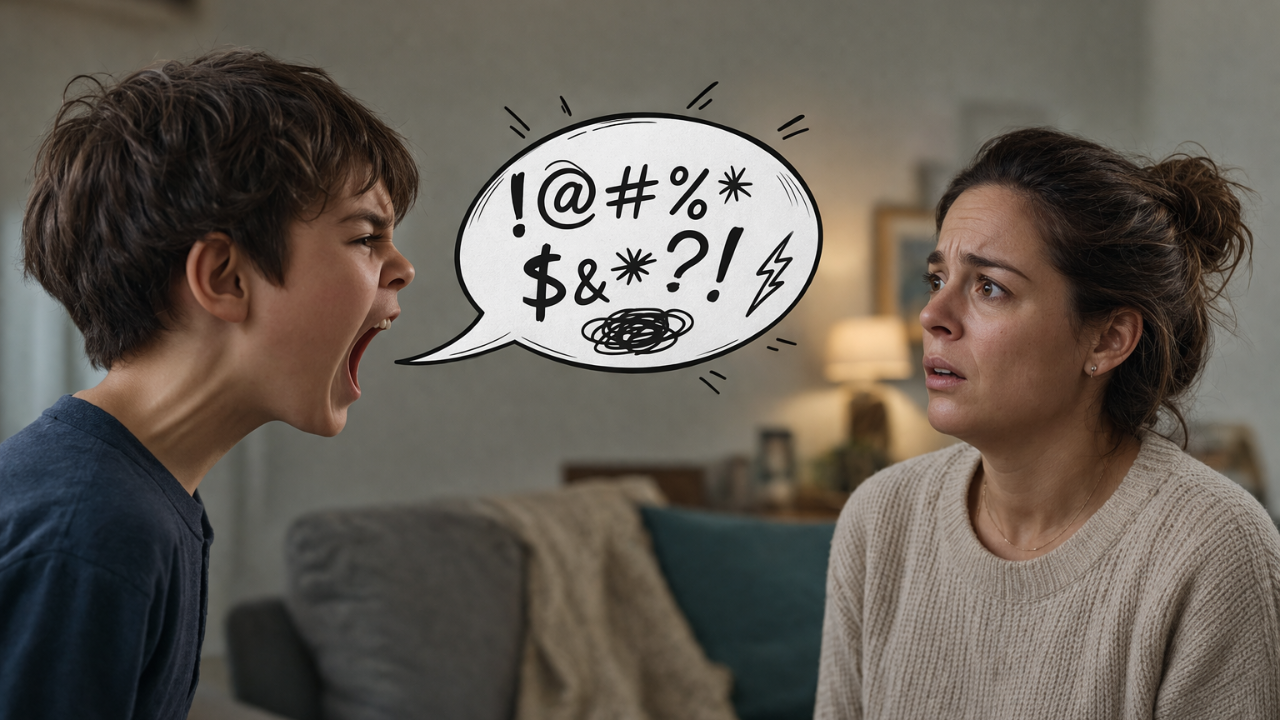
Have you ever had a moment where your child swears or says something mean to you…
And it just hits?
Not just on the surface…
But somewhere deeper in your body.
Maybe they said:
“I hate you.”
“You’re the worst.”
“F*** you.”
Or “It’s all your fault!”
And in that moment, everything inside you shifts.
You feel the jolt.
The tightening in your chest.
The heat rising.
And your mind goes to:
“How can they talk to me like that?”
“After everything I do for them?”
And maybe part of you knows…
“They’re dysregulated.”
“This isn’t personal.”
“They don’t mean it.”
But another part of you…
Feels hurt.
Feels angry.
Feels unappreciated.
Feels like something about you is being attacked.
And that’s the part we don’t talk about enough.
Because this isn’t just about your child’s behavior.
It’s about what their words activate inside of you.
And if you’ve ever found yourself thinking:
“Why does this affect me so much?”
“Why can I stay calm sometimes… but not others?”
“Why does this feel so personal… even when I know it’s not?”
Then this episode is for you.
Because today, we’re going to unpack what’s actually happening in those moments—
Not just in your child…
But inside of you.
And we’re going to look at how to shift out of taking it personally…
Without ignoring the behavior…
Without suppressing your feelings…
And without needing to become a perfectly calm parent.
Because what if…
Your child’s words aren’t a reflection of your parenting…
But a reflection of something happening in their nervous system?
And what if…
The intensity of your reaction…
Isn’t a failure…
But something that actually makes sense?
Let’s get into it.
When the Words Started to Land Differently
There was a time when my son was moving from a more internalized PDA (Pathological Demand Avoidance) expression into a more externalized one, where his verbal outbursts were becoming more intense. Shouting the F-word was starting to become a normal, everyday experience.
It annoyed me a little, but I tried to let it go. I could remember how I would swear as a teenager when I was upset, and even though he was only 11, I had some understanding that this was frustration coming out.
But then one day, something shifted.
He had been trying to control me—when I could go to the bathroom, when I could eat—and I could feel my own agitation rising. I reached a point where I tried to set a boundary and said, as calmly as I could, that it wasn’t okay for him to control my basic needs.
That attempt at a boundary sent him spiraling.
But this time, it wasn’t physical.
It was verbal.
“F*** you.”
“I hate you.”
“You’re a horrible mom.”
And even though I knew this reaction made sense, it still hit me in a way I didn’t expect.
I could feel it. That instant jolt in my body. The tightening in my chest. The heat rising.
The thought flashing through my mind: “How can he talk to me like that?”
And underneath that…Something more tender. “That hurt.”
Not just on the surface.
It landed somewhere deeper.
Because in that moment, it wasn’t just about the words.
It was everything behind them.
Here I was—rearranging my whole life, trying to do everything to help my child, trying so hard to give him what he needed, accommodating him in ways that were depleting and exhausting for me…
And yet, in that moment, it felt like none of that was seen.
None of that was felt.
Just anger.
Blame.
And words that cut.
Why This Hits So Hard
And if you’ve ever been on the receiving end of words like this from your child, you know exactly what I’m talking about.
Because this isn’t just about what they say.
It’s about what it brings up inside of you.
When I asked parents in my course community what happens for them in these moments, the responses were incredibly consistent.
There was shame.
There was embarrassment—especially in public.
There was hurt.
There was anger.
There was exhaustion.
There was fear that this might never change.
And something that came through so clearly…
Many parents said:
“I know what this behavior means… but I can’t always let it go.”
Sometimes they could see it as dysregulation.
Sometimes they could stay grounded.
And other times…
They were pulled in completely.
And that’s the part that matters.
Because this isn’t just about understanding your child.
It’s about what gets activated inside of you when this happens.
What Gets Triggered Inside You
When your child swears at you, calls you names, or tells you they hate you…
It’s not just one thing happening inside of you.
It’s layers.
And they happen fast.
The Belief About Respect
For many of us, we were raised with some version of:
Children shouldn’t talk to their parents that way.
So when it happens, something in you reacts immediately:
“This is not okay.”
And that creates an internal alarm.
The Pressure to Fix It By Teaching
Right alongside that comes urgency.
“I need to stop this.”
“I need to teach them this isn’t okay.”
“If I don’t correct this, I’m failing.”
And that urgency can feel intense.
Because it feels like something bigger is at stake than just this moment.
When It Becomes About You
Very quickly, the meaning can turn inward.
“I’m not a good enough parent.”
“What am I doing wrong?”
“Why is this happening?”
And now…
It’s not just about behavior.
It’s about your worth.
Old Wounds Get Touched
For many parents, this is where it deepens.
Because the moment doesn’t just stay in the present.
It reaches back.
Into your own childhood.
Into how you were spoken to.
Into what you came to believe about yourself if you behaved a certain way and got negative feedback or a lack of love for it.
We take on beliefs in our childhood like:
“I’m bad.”
“I’m not enough.”
“I’m too much.”
Or
“People who speak that way are bad or disrespectful.”
“People who say mean things are horrible.”
So when your child says something harsh…
It can trigger those beliefs with the vulnerable emotions that go along with them, and suddenly this moment feels so much bigger than it is.
The Feeling of Losing Control
And underneath it all, there is often this quiet but powerful layer:
“I can’t stop this.”
“This keeps happening.”
“I don’t know what to do.”
And that can feel deeply unsettling in the body.
The nervous system needs to feel like it has some sense of choice, agency, and control in order to feel safe. And when it feels like our kids are so out of control—and we can’t do anything to change it—it leaves us feeling out of control too.
And when you start to see all of these layers together, it becomes clear that a lot is getting activated inside of you in these moments.
This is why awareness matters.
Bringing light to the beliefs, the conditioning, and the past experiences that are getting triggered helps loosen their hold on you. It creates just a little more space between what your child is doing and what it means inside of you.
And from that space, you can begin to see the behavior more clearly for what it actually is.
So let’s move into that next.
What the Swearing and Mean Words May Actually Be Doing
Let’s take a moment here to just see our child’s behavior from a nervous system lens to help you gain some clarity and a newer context of what may be happening for them. Updating context in the nervous system can help immensely to handle the situation with more understanding and regulation.
Sometimes, the swearing and mean language is not just “behavior.”
It is fight energy moving through the system.
Instead of using their body to hit, push, or become physically aggressive…
Your child may be using words as a way to discharge that energy.
And when I started to see it this way, something shifted for me.
Because I realized:
My son was not using his body to hurt me (this was a good thing!).
But the energy still needed somewhere to go—and it was coming out through words.
That didn’t make the words feel good.
But it did make them feel more understandable. Because story follows state and whatever mean things our kids can say come from the state they are in and not their true Self.
Understanding the nervous system helped me to allow the words to be there in a different way.
From a nervous system lens, sometimes what you’re seeing is:
→ Accumulated fight energy
Energy that has been building in the system—frustration, overwhelm, blocked impulses, repeated “no’s,” sensory overload—that hasn’t had a safe way to move through the body.
So when it comes out, it comes out fast, intense, and often directed.
And sometimes, underneath that fight energy…
There is something even more vulnerable – Shame.
Fight Energy as Protection From Shame
For many of our kids—especially highly sensitive, reactive, or neurodivergent kids—
There is a lot of shame in their system.
They often know:
- that things feel harder for them
- that they struggle more
- that their reactions impact others
- that they are “too much” or “not enough” in some way
Even if they don’t say it directly, their nervous systems carry it.
And shame is a very hard state to be in.
It pulls the system toward collapse, toward dorsal shutdown, toward heaviness, disconnection, and “I am bad.”
So what does the system do?
It moves out of shame…into fight.
Anger, blame, and attacking language can actually be protective.
Because it is easier for the system to say:
👉 “This is your fault.”
👉 “I hate you.”
Than to drop into:
👉 “Something is wrong with me.”
So in those moments, what can look like defiance or disrespect…
May actually be a nervous system trying to protect itself from a much more painful internal state.
Why Public Moments Feel Even Harder
Many parents notice they can hold more capacity at home…
But in public, everything changes.
Because now it’s not just about your child.
It’s about being seen.
Being judged.
Feeling like other people are watching and thinking:
“Why can’t they control their child?”
And that can create a different kind of activation.
A sharper urgency.
A deeper shame.
A stronger pull to fix it quickly.
In these moments, the pressure to teach or correct the behavior can feel even stronger. You may feel like you need to show others that you don’t stand for this, that you’re doing something about it, that you’re still a “good” parent.
And that’s a very uncomfortable place to be.
I get it.
And what I’ve found is that the work here is not really about managing the moment perfectly…
It’s about what’s happening inside of you.
It’s about slowly letting go of the weight of what others might be thinking.
And more importantly, building a deeper felt sense inside yourself that:
You are still a good enough parent…
Even when your child behaves this way in public.
What About Siblings?
I often hear parents say:
“I don’t want my other child thinking this is okay.”
This is such a real and valid concern.
You want to set an example.
You want to guide them.
You want them to know what’s okay and what’s not.
And that matters.
But here’s the gentle shift.
In the moment of dysregulation, your child who is swearing is not in a place where they can learn.
And your other child?
They’re not just listening to what you say.
They’re taking in something much deeper.
They’re reading the room.
They’re sensing your tone, your body, your energy, the level of safety or tension.
They’re learning what happens when things feel out of control.
They’re learning what happens when someone loses it.
They’re learning what happens in the face of harsh words, big emotions, and disconnection.
And this is why your response matters so much more than your words in that moment.
Because when you move into urgency, correction, or escalation to try to “teach” or “show” that this isn’t okay…
What they actually feel is more threat.
More tension.
More activation in the system.
But when you stay as grounded as you can…
When you don’t take the words personally…
When you hold some steadiness in the face of that moment…
You are showing them something powerful:
That big emotions can be held.
That harsh words don’t have to lead to disconnection or escalation.
That someone can stay steady even when things feel intense.
And they feel that.
Even if nothing is said out loud.
This doesn’t mean you’re saying the behavior is okay.
It doesn’t mean there are no boundaries.
It means you are prioritizing safety first.
And then later, when things are calm, when everyone’s nervous system has settled…
That’s when the teaching comes in.
“That wasn’t kind.”
“When people feel really upset, they can say things they don’t mean.”
“We still speak kindly to each other.”
And now, it can actually land.
Because it’s not coming into a system that feels under threat.
It’s coming into a system that feels safe enough to receive it.
The Reframes That Changes Everything
There are two reframes that make a profound difference in these moments.
Reframe #1: My child has excess Fight energy that needs to get out
When your child is swearing, blaming, or attacking you…
It doesn’t mean they are bad. It doesn’t mean they don’t love you. It means something in them does not feel safe. And sometimes, that lack of safety is showing up as fight energy that needs to move.
It is so common to mount stress load all day and hold it in. Our kids do that too. And all those fight instincts that they held needs to be let out. This is energy that is trying to discharge from the body.
And it’s coming out through words.
So instead of:
“How could they say this to me?”
The shift becomes:
“They have fight energy that needs to move and get out.”
If you can help them move that energy in a physical but safe way then great, but most often we have to weather the verbal aggression storm in the moment, but perhaps later help them do something more physical, some kind of movement, to get this energy out on a daily basis so that stress load doesn’t accumulate so much.
Reframe #2: My child’s behavior does not determine my worth as a parent.
This one is just as important.
Because even if you understand your child…If their behavior becomes a reflection of your worth…Your system will react.
In those moments, there is often a quiet voice:
“I’m not good enough.”
“I’m failing.”
“I should be handling this better.”
So the second reframe is this:
I am still good enough.
I am still worthy.
I am still lovable.
I am still safe.
I am still a successful parent.
Even now. Even in this moment.
When you can hold both of these together—
“My child’s nervous system does not feel safe right now and has fight energy that needs to get out.”
And, “I am still good enough.”
Something softens. Something opens. There is just a little more space and more capacity to be ok with this challenging moment.
What This Looks Like in Practice
So what do you do in these moments?
Not perfectly. But realistically.
1. Let Go of the Fight (For Now) and Allow What Is
Start by practicing radical acceptance of the present moment. I teach this as a practice of Allowing What Is…Not forever…just for this moment.
Let go of trying to control the behavior. Drop the fight with reality.
2. Do the U-turn and Come Back to Yourself
Notice what is happening inside your body.
The tightness.
The heat.
The urge to react, teach or control.
Just noticing begins to create space.
3. Allow What Is Happening Inside You
Not just your child’s reaction but your reaction too.
Notice what’s getting triggered inside and allow it to be there. This is the practice of being with it instead of becoming it.
Be with…
The hurt.
The anger.
The shame.
The urge to fix or defend.
Let it be there.
4. Bring in Self-Compassion
Because often, another voice comes in:
“You should be handling this better.”
“Other parents don’t deal with this.”
“You’re failing.”
So instead, gently offer yourself something different:
“This is really hard right now.”
“Of course this is bringing things up in me.”
“I’m allowed to feel this.”
“I’m still a good parent, even here.”
Allowing Does Not Mean No Boundaries
Allowing your child’s expression in the moment does not mean anything goes.
It does not mean you accept harm.
It does not mean you don’t step in when safety is needed.
It does not mean you don’t guide or teach.
It means you are choosing not to escalate the moment while your child is dysregulated.
It means you are prioritizing safety first.
And then, when regulation returns…
You can still hold boundaries, guide, repair, and teach.
5. Then Come Back to Your Child
Not to teach. Not to correct. But to help bring the moment toward safety.
6. Teach Later, When There Is Connection
When things are calm, that’s when you guide, explain, and repair.
Coming Back to What Matters Most
There will be times when you still react. Of course there will.
Because this depends on your capacity that day…
your stress levels…
your history…
what’s already been building in your system.
This isn’t about getting it right every time.
It’s about slowly building the ability to stay with yourself a little more…in moments that used to completely take you over.
When your child says:
“I hate you.”
“You’re a horrible parent.”
“F*** you.”
It can feel deeply personal.
But it isn’t a reflection of your worth.
It’s a reflection of a nervous system that has too much built-up fight energy…and doesn’t yet know how to release it safely.
And your work in that moment is not to control the behavior. It’s to stay connected to yourself.
To remember:
This is fight energy moving through my child…
and I am still good enough.
Because from that place…You don’t have to be perfect.
You just have to be steady enough to stay with yourself…
And over time, that steadiness becomes something your child can begin to feel too.
Free: The 3 Shifts Guide
The trigger loop and 3 patterns you get stuck in during meltdowns — and how to shift them so you can stay calm instead of react.
Free: 7 Truths About Why You React to Your Child Guide
Why you react even when you know better — the conditioning, nervous system states, hidden beliefs and patterns, and buried emotions running the show.

