
When Responsibility Feels Heavy Parenting a PDA, Autistic, High-Needs Child
**You can also listen to this in audio format only on The Regulated Mother Podcast on Apple or Spotify. Look for Episode #33
**Below is the blog article for easy reading.
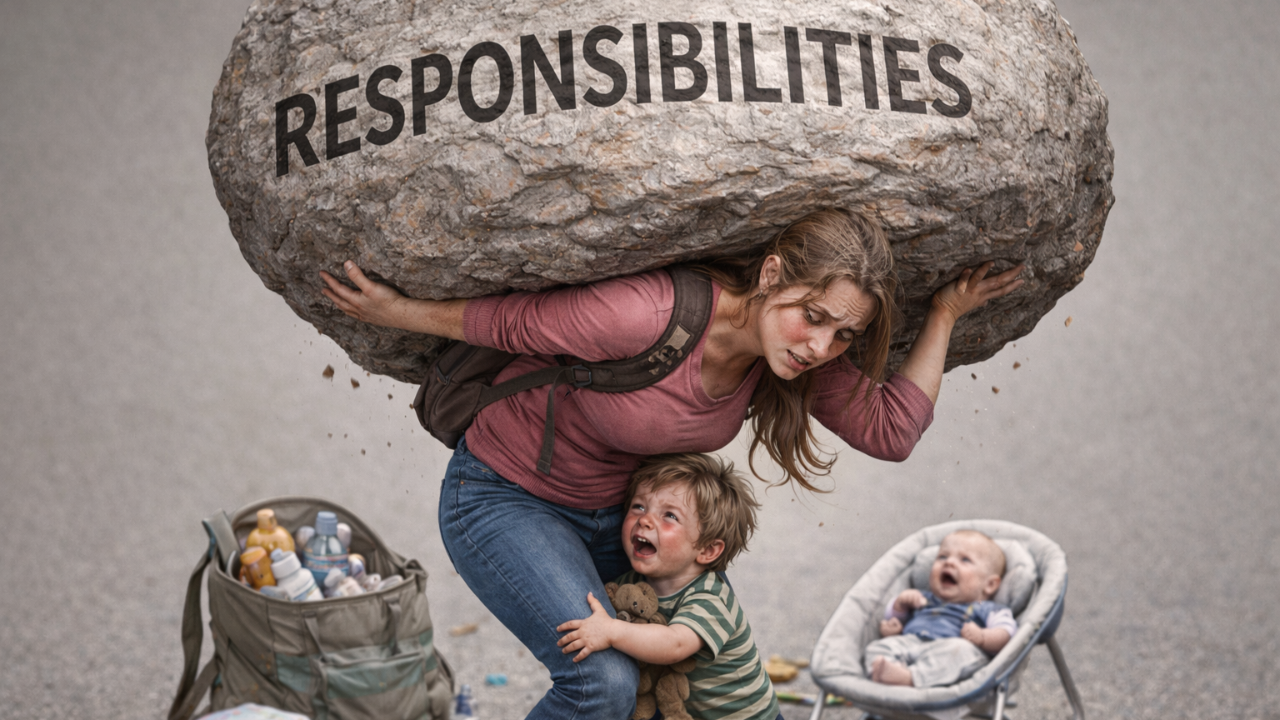
When Responsibility Feels Like a Weight You Can’t Put Down
If you’re a parent who feels like everything you do for your child feels heavy — not just hard, but heavy — this episode is for you.
If it feels like your mind is constantly running in the background, thinking about therapies, accommodations, skills your child needs to learn, what you should be doing differently, and whether you’re doing enough…
If even the smallest daily tasks feel loaded with pressure and fear about your child’s future…
And if you sometimes wonder why parenting feels so much heavier for you than it seems for everyone else…
I want you to know something right away: there is nothing wrong with you.
What you’re carrying is real — and it’s not just emotional. It reflects how the nervous system responds when the heavy weight of responsibility is ongoing, uncertain, and intense, especially in the lived reality of parenting a PDA, autistic, or high-needs child.
In this episode, I’m going to help you understand why responsibility can feel so crushing in these circumstances — and, just as importantly, how to begin carrying it in a way that feels lighter, safer, and more sustainable for your nervous system.
If you’ve been living with this weight of responsibility for your child for a long time, stay with me. This conversation may help something in your body finally exhale.
Let’s begin.
When Everything Became My Responsibility
I remember when my son stopped going to school. He was ten years old and supposed to start Grade 4. The year before, he had experienced trauma at school, and the following year the school placed him in an all-boys class—even though he had always felt safer with girls, who were more predictable and gentler for him. He was also placed with a boy he experienced as a bully, someone who had called him a crybaby.
This was a private school for children with additional needs. On paper, it should have been supportive. But at the time, they didn’t understand nervous system safety or how to work with anxiety in a trauma-informed way. I tried everything I could to help my son acclimate. I went to school with him. The school occupational therapist worked with him. We adjusted, accommodated, and scaffolded as much as we could.
But when I picked him up at the end of the day, something in him was gone. He looked frozen—almost catatonic—like he wasn’t really there anymore. I could see that his nervous system was shutting down. The daily meltdowns trying to get him to school were escalating, and it became clear that forcing him through this environment was creating more trauma, not less. So I pulled him out of school.
In hindsight, I can see clearly that he was already in burnout. It was the right decision. And it was also the moment when a heavy, relentless weight settled into my body.
When Responsibility Stops Feeling Manageable and Starts Feeling Heavy
I had already felt responsible for my son for a long time. He had always needed more support than other children. He was extremely demand avoidant and required a great deal of scaffolding just to function in daily life. But once he left school, the responsibility felt absolute.
Suddenly, it felt like everything was on me—his learning, his development, his future, his ability to make friends, his milestones, his eventual independence. Underneath all of that was a deeply conditioned belief I hadn’t fully recognized until then: that how he turned out would somehow be a reflection of me as a parent.
This is where responsibility shifts. It’s no longer just about care and guidance—it becomes infused with fear, pressure, and conditioned meaning. Responsibility stops feeling like something you do and starts feeling like something you carry all the time.
Each day became this weight of responsibility—this constant mental scanning of what I needed to try next so he could keep learning and developing. The weight of his future felt like it rested on me. My body teetered on the edge of overwhelm daily. It felt like: If I don’t figure this out, who will?
When Learning Stops and Fear Takes Over
When my son left school, he wanted nothing to do with learning. At first, we tried unschooling—visiting zoos, aquariums, and science centres so he could learn without pressure or demands. For a while, this worked. But as his OCD worsened, his PDA went from internalized to externalized, hormones began to enter the picture, and even those gentle forms of learning became intolerable.
Eventually, we entered a long stretch—nearly six years—where there was no formal schooling and very little visible learning. His mental health declined, the level of aggression and violence increased, and we tried medications in hopes of helping him feel better. Unfortunately, they didn’t work well enough and caused side effects, including regression in his development. There were periods when he was housebound, and daily life became very small.
During that time, my “seeming” sense of responsibility narrowed dramatically. I was no longer worrying about academics or progress. But I was focused on getting him to meet his basic needs, which became another huge weight—often filled with even more fear when he couldn’t eat well, toilet enough, sleep enough, or practice much hygiene. Each day became about helping him survive the day. And although the pressure to learn and develop left the table, the weight I carried around his mental health only grew heavier.
Fear was always there. How am I going to get him to do this? How will he ever function? What will his life look like? What does this mean about me? Trying to get help from the outside—from doctors or therapists—didn’t help and often made things worse. I would walk away from those calls feeling like I wasn’t doing enough for my child and that I should somehow take on even more responsibility.
My body felt loaded and heavy. Fear of the future left me frozen and numb many days, just trying to get through. It took me a long time to understand that the weight I was carrying wasn’t just about circumstances—it was about how responsibility interacts with the nervous system and the brain’s meaning-making.
Why Responsibility Feels So Heavy
If responsibility feels heavy for you, it’s not because you’re weak. It’s not because you’re not resilient enough. It’s because you’re carrying a different kind of load—one that hits multiple layers of the nervous system all at once.
Here are the reasons responsibility can feel so heavy when you’re parenting a PDA, autistic, or high-needs child.
1. The Load Is Actually Bigger
All parents carry responsibility for their children’s wellbeing and development. That’s normal. But when your child has higher needs, you have to do more. You have to think about more. You have to adapt more.
It’s not just “parenting.” It’s therapies, accommodations, school advocacy, regulation support, environmental tweaks, communication shifts, skill-building, prevention, recovery, repairs, planning ahead, and constantly rethinking what will help. Your mind can become consumed by always thinking about how to help your child develop and function in the world.
For parents of neurotypical kids, development often unfolds in a more easeful way—without having to consciously engineer and scaffold it. For parents of high-needs kids, it can feel like development rests on you going the extra mile, all the time. That alone adds a huge weight.
2. Old Mental Models Create “Loss” in the Brain
The second reason is conditioning—our mental models of what makes a successful parent and what makes a successful child.
Many of us inherited a definition of “success” that looks like: calm, compliant, obedient, social, responsible, doing well at school, meeting milestones, being kind, being able to take care of themselves. Our brains learned: This is what it means to be safe, accepted, worthy, and successful.
So when our child can’t fit those models, the brain doesn’t just register “difference.” It registers loss. It registers danger. It registers, This isn’t how life is supposed to be.
If we don’t update these mental models, we spend years fighting reality—never fully present, always trying to control outcomes, constantly feeling like we’re failing and our child is failing too. No wonder responsibility feels heavy when it’s built on an outdated definition of what “should” be happening.
3. You Feel Alone With It
The third reason responsibility feels heavy is the feeling that you have to do this on your own.
Parenting a high-needs child can make you feel different from society. You may not feel like you belong anymore. Depending on your child’s challenges, you may have to pull them out of school. You may not be able to participate in the things other families do easily—playdates, social gatherings, family events, vacations, casual outings.
And when you feel alone while carrying a huge responsibility, it gets heavier.
For many parents, this aloneness also pokes old wounds—memories of feeling alone earlier in life—which can compound the current situation. It becomes not just, “This is hard,” but “I’m alone with this hard load, and no one can help me.” This can lead to feelings of helplessness too, which is usually always connected to childhood trauma.
4. It’s Inescapable (And That Changes Everything)
The fourth reason is the inescapability: this is your child, and you can’t escape it. You feel like you don’t have a choice.
This is the “clincher” for trauma encoding. When your nervous system neurocepts that you are trapped with no way out and no real options, it can drop you into dorsal vagal shutdown—numbness, collapse, disconnection, despair.
And when responsibility feels never-ending, your system doesn’t experience it as a temporary season. It experiences it like a life sentence. That “never-ending” feeling is part of the trauma vortex.
5. Fear Is Constant and Ongoing
The fifth reason is the fear that gets triggered—fear of your child’s future, fear of what will happen if they don’t develop skills, fear of whether they’ll be okay in the world.
For many parents of PDA/high-needs kids, fear isn’t occasional. It’s constant background noise. And when we live with ongoing fear, we burn massive energy staying in sympathetic fight/flight. We don’t feel safe unless our child fits the molds that our brain believes equal safety and acceptance in the world.
Fear makes responsibility heavy because it turns every decision into a high-stakes emergency.
6. Grief Adds Weight
The sixth reason is grief—often heavy, often unspoken.
When the brain neurocepts loss—loss of ease, loss of imagined timelines, loss of community, loss of the parenting experience you thought you’d have—grief naturally arises. And when grief isn’t acknowledged or metabolized, it doesn’t disappear. It sits in the body and adds weight to everything.
7. There Aren’t Clear Reward Loops
The seventh reason is that you often don’t see rewards for your efforts in the short term.
It can take years of pouring energy and nervous system resources into your child. There are constant ups and downs. You think you see progress—then it looks like regression. Your brain craves the loop of: effort → reward. That loop creates dopamine and makes hard work feel worth it.
But when effort doesn’t reliably create visible reward, your brain concludes: I’m not doing enough. And even when you are doing far more than most parents, responsibility becomes loaded with negativity and feeling like you’re somehow failing.
No wonder it feels heavy.
How to Make Responsibility Feel Lighter (Not Like a Life Sentence)
The goal isn’t to pretend the load isn’t real. The goal is to change the felt sense of carrying it—so responsibility is no longer fused with panic, shame, entrapment, and hopelessness.
Here are the shifts that help.
1. Self-Compassion for the Greater Load (And Micro-Breaks)
Start by acknowledging the truth: you are carrying more.
Self-compassion matters here, not as a nice idea, but as nervous system medicine. It helps when you find yourself thinking, Why do I have to do so much more than other parents? It’s not fair. It’s exhausting.
In addition, many parents I work with are so hard on themselves, always feeling like they are not doing enough for their child, feeling like somehow they need to be even more responsible.
Compassion doesn’t remove the load, but it reduces the added layer of self-attack. And alongside compassion, you need breaks—small ones, real ones—because a nervous system can’t carry a heavy load without moments of downshifting. The nervous system needs moments of rest so it can repair, regenerate and keep going. So how can you allow yourself a break from the responsibilities when you can, even if it’s just a break from thinking about them, and give yourself a self-compassion break instead?
The second part of this is building the felt sense: I am strong enough. Not through forcing positivity, but through helping your body know, again and again, that you can handle hard things and still remain here.
2. Update the Mental Model: Let Safety Lead
This is one of the biggest shifts: acknowledging that your child is different, has different needs, and is on a different path.
Can we update the internal model so your brain stops trying to force a high-needs child into an old definition of success based on neurotypical norms?
For a high-needs child, success often looks like nervous system safety and support, from which then comes capacity and ability to develop and do more – but on their own development timeline. Can we let go of attachment to immediate outcomes. Your brain will want the immediate outcome, but you are not your brain. You are the Awareness of it and can choose a different way of seeing things. Development can happen on a different timeline and in a different way. And when you let nervous system safety lead and allow a different timeline, you take pressure off both of you.
This doesn’t mean you stop supporting your child. It means you stop measuring worth and success by whether results show up quickly.
3. Build a Tribe So You’re Not Carrying It Alone
Humans aren’t meant to carry heavy responsibility alone.
Creating a “tribe” can mean community, friendships, a therapist, a support group—any place where you feel understood and where your child can belong too. Many of the parents I work with inside my course, The Regulation Rebuild, feel like they finally have a community where they belong, and this helps them so much to lighten the load. When you feel like you belong, the burden is lighter.
And for some of us, feeling all alone didn’t start with our kids, but often came from a childhood experience where it became a wound that now sits in your system getting triggered by the current circumstances. It’s important to reflect on this so you can separate past from present, and perhaps worth working with that wound in therapy so it doesn’t compound the present situation.
4. Create a Felt Sense of Choice (And Purpose)
Even when you truly have to do a lot, your nervous system needs choice.
It can feel like you have no choice but to do all this. But reframing into: “I’m choosing this” can change everything. Choice brings agency, and agency brings regulation.
And choice becomes more sustainable when you connect it to meaning and purpose. When something is hard but purposeful, we can endure it far more easily.
Purpose doesn’t have to be only about your child. It can include you too.
For me, when things feel hard and the responsibility feels heavy, I return to my purpose: I am learning who I truly am underneath survival-based conditioning. I am learning to be in my power inside what challenges me. That is deeply rewarding to know that I’m learning and growing from this challenge and there is purpose to this pain.
I also imagine my son as an adult, looking back and appreciating what I did for him. And even now, I see the fruits of my labor showing up in ways I never expected.
5. Work With Fear — Let Safety Be There Too
Fear will always arise. The goal isn’t to eliminate it. The goal is to help your body hold fear and safety at the same time.
Fear of your child’s future may always come up—but can trust also be there? Can regulation also be there? Can you learn to tolerate fear without being taken over by it?
This is where nervous system work matters: orienting, grounding, resourcing, co-regulation, and reminding your system, “Fear is here, and I am still safe enough in this moment.” And, “Today’s situation does not predict the future. Anything is possible in the future.” This helps me to orient my brain to future possibilities instead of future demise.
6. Process the Grief So It Can Move
Grief adds weight when it stays stuck in the body.
Acknowledge the way your brain registers loss. Let it be unfair. Let it feel painful. Validate it. And then let the grief unload—through tears, somatic practices, therapy, supportive witnessing, or gentle grieving rituals.
When grief moves, you don’t necessarily feel “happy”—but you feel lighter. And from that place, you can access: How would I rather hold this? How do I want to show up inside this reality?
7. Orient to Glimmers So Your Brain Gets Reward
Finally, orient to glimmers—not only to progress or milestones, but to present-moment rewards.
What do you love about your child? Even the smallest things like their soft cheeks or hands. The way your child gets excited about something. The tv show they love. The tiny moment of connection. The sparkle in their eyes. The funny comment. The moment they let you in.
These glimmers matter because they give your brain reward loops in the present. They tell your nervous system: There is goodness here too. And when your system receives small rewards, it has more capacity to keep going—without needing constant proof that everything is improving.
Hanging On To Hope
If everything you do for your child feels heavy right now, there is nothing wrong with you. You are likely carrying more uncertainty, more emotional labor, and more nervous system load than most parents ever have to carry. And you are doing it with care and devotion—even when it doesn’t feel like enough.
Responsibility doesn’t disappear on this path. But it doesn’t have to feel like a life sentence.
Staying present with what is, while still holding hope for a better future, is no easy task. But it leads to deep learning and growth—and the realization that you are far stronger than you ever knew.
And when you begin to feel that strength—and a deeper sense of purpose in carrying this load—something paradoxical happens: the load softens, because you’re no longer carrying it through the same lens.
Free: The 3 Shifts Guide
The trigger loop and 3 patterns you get stuck in during meltdowns — and how to shift them so you can stay calm instead of react.
Free: 7 Truths About Why You React to Your Child Guide
Why you react even when you know better — the conditioning, nervous system states, hidden beliefs and patterns, and buried emotions running the show.

