
The Question That Changed My Experience Parenting My PDA Child

**You can also listen to this in audio format only on The Regulated Mother Podcast on Apple or Spotify. Look for Episode #29
**Below is the blog article for easy reading.
When Parenting Feels Like Your Life Is Shrinking
There are moments in parenting a PDA, high-needs child when it doesn’t just feel hard — it feels like your life is shrinking.
Like your world is getting smaller.
Like there’s no room left for you.
Like every part of the day is about meeting your child’s needs, while your own get quietly pushed aside.
And then, at some point, a familiar thought creeps in:
What about me?
If you’ve ever felt trapped between your child’s nervous system and your own…
If you’ve ever noticed resentment, grief, or despair bubbling up and wondered, Is this ever going to change?
You’re not alone.
In this episode, I want to share the one question that completely changed how I experience parenting my PDA child — not because our challenges disappeared, but because my relationship to them changed.
We’ll talk about how shifting the question we ask ourselves can pull us out of survival and victimhood, how focusing on what we are learning — not just what we’re losing — creates meaning, and how this is the doorway into post-traumatic growth.
This isn’t about silver linings or forcing positivity.
It’s about finding your power, your agency, and your becoming — right inside the hardest moments.
Let’s dive in.
When Parenting a PDA Child Feels All-Consuming
There are moments in this parenting journey when it doesn’t just feel hard — it feels like life is closing in.
This past holiday season was one of those times.
My son’s caregiver — someone he is deeply attached to — has been away for a month. When she’s gone, his anxiety rises sharply. He clings to me. Won’t let me out of his sight. Any mention of me working sends him into panic.
When he’s with me, he perseverates constantly:
You’re not leaving, right?
You’re not going anywhere, right?
You’re staying here, right mommy?
I mentioned getting a massage — something that usually helps regulate my nervous system — and he completely lost it.
My days became intense. Nights became later. I needed more sleep. And my mornings — usually the one small pocket of time that’s just mine — started disappearing. It felt like mornings and nights were being squeezed tighter and tighter.
Like my world was narrowing.
This happens whenever I spend long stretches with my son without real breaks — aside from a short daily walk. I do what I can: micro-moments of regulation, tiny pockets of rest.
And still, that familiar feeling rises up inside me:
What about me?!
When Old Patterns Resurface
On Christmas Day, that feeling collided with loneliness.
My husband went to his family’s gathering. My son and I stayed home. We haven’t spent Christmas with extended family for years now. My son has been largely housebound again this past year.
And while there has been real progress — while I genuinely enjoy much of my time with him and intentionally look for glimmers in our connection — that day was heavy.
I became dysregulated.
I got upset with him for controlling me so much.
I often joke that I have some PDA traits too — especially around autonomy. But the truth is simpler: every nervous system needs choice and autonomy to feel safe.
And once again, I found myself doing something I’ve done countless times before.
I gave up my needs so my son could meet his.
When I give him all of me, he can eat better. Engage more. Do things that would otherwise feel impossible.
But it comes at a cost.
I push through.
I minimize myself.
I hold it all in.
Until I can’t anymore.
And then — even though it’s no longer the rage it once was (there has been deep healing) — I still end up depleted, resentful, and triggered.
Later, when I was finally alone, I collapsed into tears.
That old, familiar belief surfaced:
No one cares about me or my needs.
The Moment I No Longer Fall Into Despair
Here’s where something different happened.
Instead of spiraling — instead of dropping into days of despair, anger, or victimhood — I stayed with the feeling.
I unblended from it (which means I was being with it, instead of fully taken over by it).
I spoke to myself kindly.
I soothed the loneliness inside me.
And then I felt clarity.
This was an old pattern.
And there was still something here to learn.
So I asked myself the question I now return to again and again:
What do I need to learn from this that I haven’t yet learned?
That single question shifted everything.
It pulled me out of the trauma vortex — out of the sense that this was just another loss — and back into agency.
It reminded me that when patterns repeat, it doesn’t mean I’m failing.
It means there’s another layer of growth available.
What came through was this:
There is still room to find more self-care inside a situation that feels like it has to be either him or me — but not both.
The next day, I didn’t overhaul my life.
I made small, compassionate shifts.
I found ways to rest beside him while meeting my needs.
I allowed myself to exist with him instead of disappearing for him.
And once again, I remembered:
This is not just loss.
There is something to be gained here, and I’m not quite done yet learning how to give myself what I need, and take care of me, inside a situation that easily makes me feel like I have to give myself up for my son to be OK.
Why This Question Is So Important for Parents of PDA & High-Needs Kids
As parents of PDA and high-needs children, I believe we are all on a hero’s journey.
This path is hard.
It is grueling.
It is not for the faint of heart.
Each one of us is asked to go far beyond the norm—to find our way through pain and suffering rather than around it, and to keep going even when there is no clear endpoint in sight.
Every true hero’s journey involves moving through hardship.
But the ending we are often taught to expect is the wrong one.
For parents of PDA and high-needs children, this journey is not about the day our child is suddenly “okay,” regulated, independent, and life becomes easy. And it is certainly not about the day we stay calm through every storm—that expectation is neither realistic nor human.
Those stories keep us trapped.
Our real hero’s journey is this:
learning how to grow, awaken, and reclaim our power within ongoing challenge.
It is about discovering who we are beneath survival—beneath the trauma vortex that tells us:
This will never end.
You are trapped.
You are losing everything.
This is where the questions matter.
- What is this here to teach me?
- How am I growing and changing because of this?
- What am I meant to learn from this experience?
These questions do something profound.
They pull us out of victimhood.
They restore meaning.
They reconnect us to choice, agency, and purpose.
They help us feel that our pain is not meaningless—that there is gain alongside the grief—and that we are becoming more of who we are truly meant to be.
When we stay stuck in the belief that this life is only something that’s happening to us, we remain trapped in the trauma vortex. No one wants to live there. It is a painful, powerless place to be.
But when we begin to feel and acknowledge the gains of our experience—how we are learning, growing, and changing—we shift.
We move from the trauma vortex into the healing vortex.
From victimhood into empowerment.
From feeling trapped into feeling alive and engaged in our own becoming.
What This Past Year Has Taught Me
This past year of parenting my PDA, high-needs child has been one of the most challenging — and most transformative — years of my life.
Here are five of the biggest things I’ve learned, and am still learning:
1. My Needs Matter Too — Even When My Child Needs So Much
For a long time, it felt like there was only room for one of us.
If my son’s needs were met, mine had to disappear.
This year has taught me that while his needs are real and significant, my needs don’t become irrelevant just because his are intense. When I consistently abandon myself, I eventually become depleted, resentful, and dysregulated — which helps neither of us.
Learning to honor my needs in small, creative, nervous-system-safe ways has been essential. Not perfect. Not ideal. But enough to remind my system that I exist too and I deserve the same care I give to my son.
2. Allowing What Is Softens Resistance and Brings Choice Back Online
So much of my suffering has come not from what is — but from resisting what is.
When I fight reality, my nervous system locks into survival:
This shouldn’t be happening.
It has to be different.
I can’t handle this.
But when I practice allowing what is — even when I don’t like it — something shifts.
Allowance doesn’t mean approval, condoning or giving up.
It means acknowledging reality as it is right now.
From that place, choice returns. And the nervous system becomes more flexible to ride the waves of not only the hard feelings but also make room for the good feelings too.
3. Kind Self-Talk and Self-Compassion Are Non-Negotiable
This year has deepened my understanding that how I speak to myself in hard moments directly shapes my nervous system.
Harshness tightens everything, keeping the nervous system stuck in survival.
Kindness softens and steadies and regulates.
Offering myself compassion in the middle of the mess — not after I’ve “handled things well” — has been essential.
Self-compassion doesn’t change the situation.
But it changes my relationship to it.
And that changes everything.
4. Letting Go of Fear and Staying Hopeful — Even When Progress Looks Messy
There are many moments in our life that don’t look “okay” from the outside.
My son has gone many months without showers.
Irregular sleep.
Inconsistent hygiene routines.
No “school-based” learning.
This year has taught me to further loosen my grip on fear.
Fear pulls me into catastrophic futures. It pushes me into I have to find a way to take control of this mode — and that energy often sends my child even further into demand avoidance.
Hope, on the other hand, anchors me in the present. It opens us up to possibility. When I help my fear feel safer, I can hold onto hope — and that hope actually becomes regulating for me.
As I learn how to support my fear within the very real constraints I am living under, I’ve begun to trust the nervous system process more deeply. I’ve learned to trust that safety comes first — and that everything else unfolds in its own time.
That trust does so much to quiet and support the fear.
5. Shedding Deep Conditioning I Didn’t Even Know I Was Carrying
Perhaps the most profound learning this year has been realizing just how much conditioning I am actively shedding.
Beliefs about productivity.
Beliefs about success.
Beliefs about what a “good mother” looks like.
Beliefs about worth being tied to output, milestones, and appearances.
Parenting a PDA, high-needs child has forced me to question so much of what I was taught about life, parenting, and myself. It has challenged the rules I unconsciously lived by and revealed how deeply these expectations were shaped by survival, not truth.
And in doing so, I am becoming freer.
I also believe that as we shed this deeper conditioning—much of it rooted in generational trauma and passed down through families for generations—we are doing more than healing ourselves. We are helping to free our family system. We are loosening patterns that no longer serve.
And in small but meaningful ways, this contributes to creating a world that is more inclusive, more compassionate, and safer for nervous systems like ours to exist within.
From “Why Is This Happening?” to “Who Am I Becoming?”
When we shift the question from:
Why is this happening to me and my child?
to:
What is this here to teach me — and how am I growing because of it?
the power dynamic changes.
We move out of victimhood and into authorship.
Out of despair and into meaning.
Out of feeling trapped in survival and into choice.
This is the moment we stop feeling like life is simply happening to us — and begin to recognize ourselves as active participants in our own journey.
Now that we’re in a new year, I want to invite you into a gentler kind of reflection.
Take some time to look back and notice what you have learned — not just about your child, but about yourself. Notice how you have stretched, softened, reoriented, and grown in ways you never would have chosen, but that have nonetheless shaped you and even benefited you in some way.
And then, just as importantly, take time to appreciate yourself.
Acknowledge yourself for the deeply hard inner work you are doing — the kind of work most people are never asked to do. The kind of work that requires you to face your own nervous system, your conditioning, your fears, and your pain — and still keep showing up with care and intention.
This work matters.
It matters for changing generational patterns.
It matters for how your child experiences safety and belonging.
And it matters for the kind of world we are collectively creating.
When we slow down enough to feel the learning and acknowledge the growth, something important happens inside the nervous system: the gain begins to register alongside the loss. In those moments, we begin to realize that we truly are the hero of our own journey — not because the path is easy, but because we are meeting it with awareness, courage, and choice.
And that is what allows pain to transform — not into something that never hurt, but into something that carries meaning.
That is the shift into post-traumatic growth.
An Intention for the Year Ahead
Instead of resolutions that ask more of you, what if you set an intention for what you want to continue learning?
Ask yourself:
- What is life inviting me to develop through this experience?
- What do I want to grow into more fully this year?
- What kind of support do I want to offer myself as I continue this journey?
When we consciously choose what we are learning and becoming, our nervous system receives an important message:
There is gain here.
There is meaning here.
This is worth it.
Not because it’s easy —
but because of who you are becoming along the way.
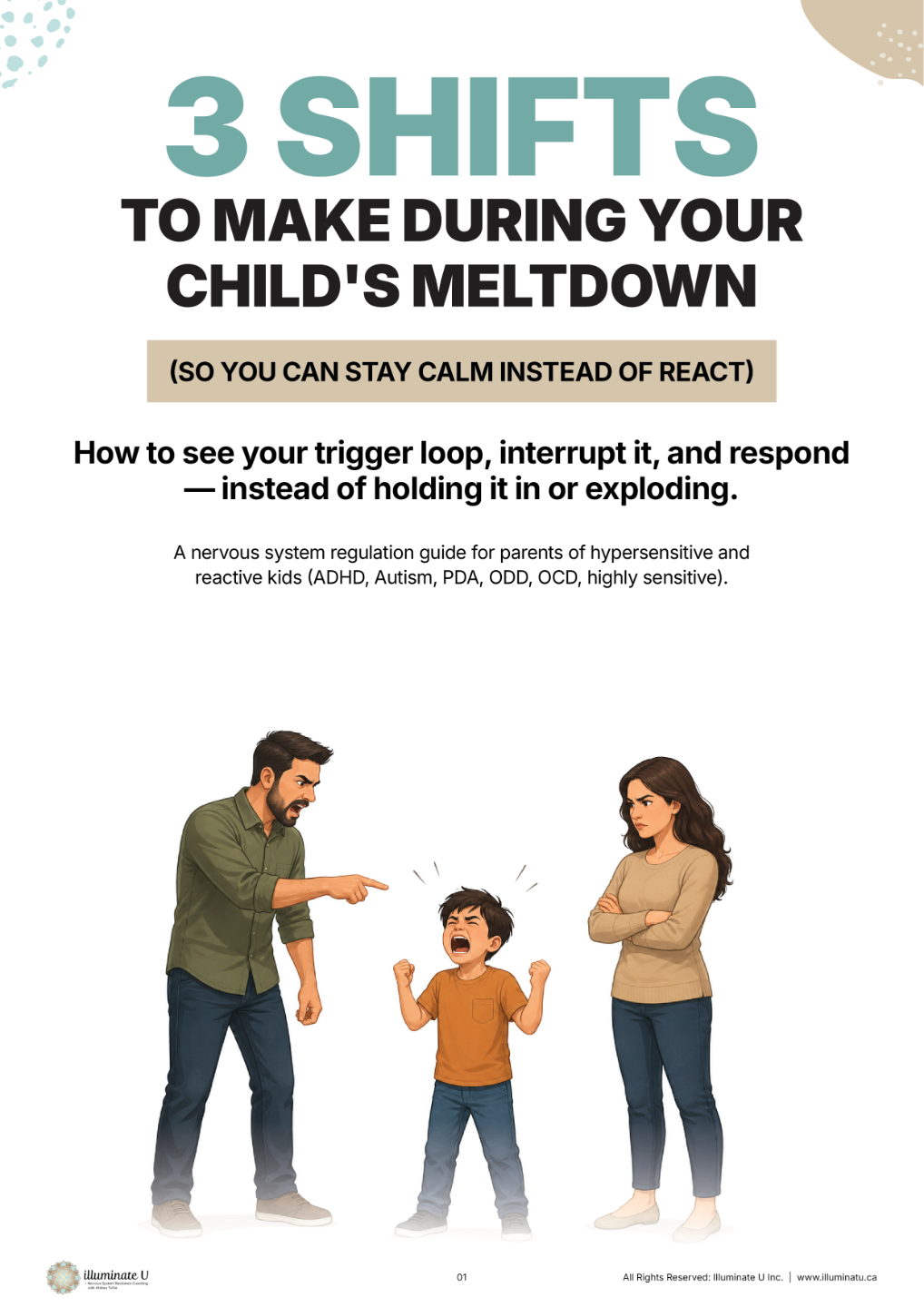
Free: The 3 Shifts Guide
The trigger loop and 3 patterns you get stuck in during meltdowns — and how to shift them so you can stay calm instead of react.
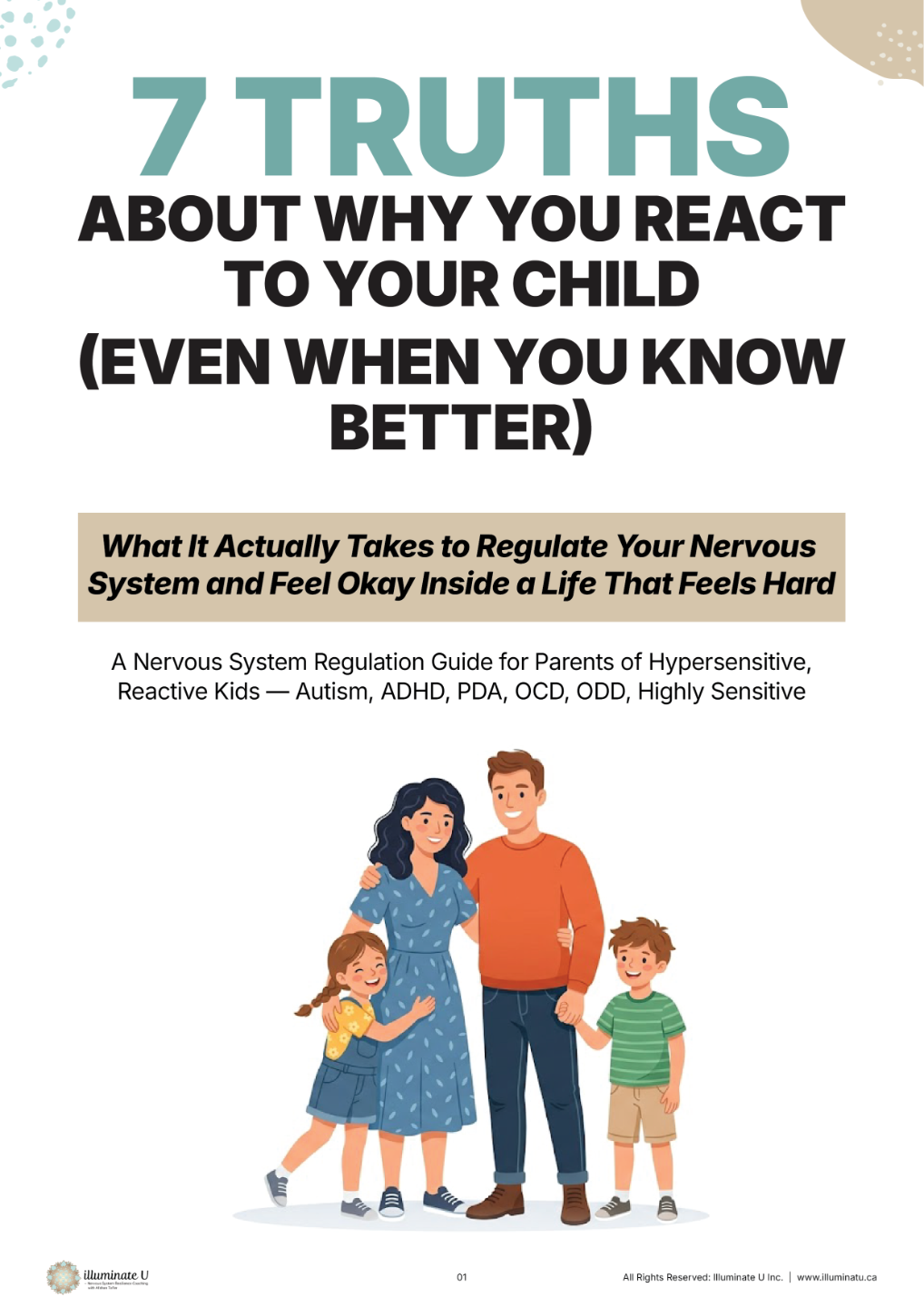
Free: 7 Truths About Why You React to Your Child Guide
Why you react even when you know better — the conditioning, nervous system states, hidden beliefs and patterns, and buried emotions running the show.

