
Reducing Holiday Triggers When You’re Parenting a PDA, High-Needs Child

**You can also listen to this in audio format only on The Regulated Mother Podcast on Apple or Spotify. Look for Episode #27
**Below is the blog article for easy reading.
When the Holiday Dream Collides With Reality
If the holidays leave you feeling tight in your chest before they even begin…
If you find yourself longing for a beautiful, connected, peaceful Christmas — and at the same time bracing for meltdowns, grief, and disappointment — you are not alone.
For a long time, I was able to create the magical holiday I had always dreamed of. The tree, the movies, the gatherings, the traditions. And then, as my son got older and his PDA, OCD, and sensory needs intensified, all of it slowly fell apart. The things that once felt magical became unsafe for his nervous system — and devastating for my heart.
The holidays started to feel like a constant collision between what I wanted them to be and what they actually were. And that gap — between the fantasy and the reality — became one of the most triggering times of the year for me.
In this episode/blog, I want to talk about why the holidays are so activating for parents of PDA and high-needs children — from grief and childhood conditioning, to social expectations, to the pressure to create memories — and more importantly, how to reduce that triggering in a way that actually supports your nervous system and your child’s.
We’ll talk about allowance instead of resistance, letting go of expectations, grieving the real losses, understanding the childhood pain beneath the holiday dream, and finding unexpected glimmers and gifts in a simpler, quieter season.
This isn’t about forcing yourself to like what’s hard.
It’s about learning how to stop fighting reality so you can feel more grounded, less reactive, and more at peace — even when the holidays look nothing like you imagined.
If the holidays have been feeling heavy, painful, or overwhelming, this conversation is for you.
Let’s begin.
For a long time, I really did manage to create the magical Christmas I had always longed for.
When my son was younger, we put up the tree, we decorated together, we watched Christmas movies snuggled under blankets, and I cooked the turkey dinner we all loved. For a few years, I felt like I had finally cracked the code — like I was living the holiday dream I had imagined since childhood. It was tender, beautiful, nostalgic, and deeply symbolic. It felt like healing.
But as my son grew and his PDA (Pathological Demand Avoidance) became more externalized, OCD (Obsessive Compulsive Disorder) patterns showed up, and sensory needs became more pronounced, the season slowly began to unravel.
The things that were once magical became overwhelming and unsafe for his nervous system. Decorations started coming down. Ornaments were thrown and smashed. The tree became too much stimulation and too much unpredictability. Movies became a demand, and eventually I wasn’t allowed to watch them at all. Even cooking turkey — the holiday centrepiece of our family — became a trigger that led to hour-long rages because his OCD and PDA needed so much control over it and had labeled it dangerous.
The gatherings we had once hosted — twenty-five people filling our home with food, laughter, and energy — became impossible. The noise, expectations, and social dynamics were too much for him. Eventually, we cancelled everything. Family Christmases went from bustling and warm to quiet and empty. I didn’t realize right away how much of my identity, nostalgia, and sense of belonging had been tied to those rituals.
And beneath all of that was something even deeper: I had been trying to recreate the Christmas I never had. Growing up, the holidays were heavy and isolating. My father struggled with seasonal affective disorder and likely undiagnosed autism, and gatherings with other families became a big stressor for all of us. My mother carried the stress of managing everything alone. As a child, I escaped into Christmas movies — into the fantasy of a perfect holiday where everyone was happy and connected.
So when I became a parent, creating that magical holiday wasn’t just about tradition — it was about finally giving myself the experience I always wanted. It felt like a way to heal the loneliness I had carried. Which meant that losing it again, this time as an adult, hurt in a familiar and profound way.
The holidays I was living became another version of the holidays of my childhood — unpredictable, messy, and deeply lonely. And I see many parents of PDA kids going through the same experiences – wanting so much to create a beautiful, connected, even perfect Christmas memory, only to have to accept the harsh reality that Christmas and the holidays will be nothing like what they had expected or wanted.
The holidays are a triggering time for so many reasons, and I want to share with you how I began to make peace with a very different kind of Christmas, and how — to my own surprise — I found more freedom and authenticity in the shift than I ever found in the perfection I had been chasing.
Why the Holidays Trigger Parents of PDA Children So Intensely
1. The Emotional Collision Between Fantasy and Reality
The holiday season amplifies everything — our longing of how we want things to be, our grief that our reality is so different from what we wanted, our expectations of having some peace and joy or family gatherings, our exhaustion from managing everyone’s distress, and all of our own nervous system activation we hold inside for it all, mounting a huge amount of stress load.
One of the biggest triggers is the mismatch between what we thought the holidays would be and the reality we are living. Many of us grew up internalizing a cultural image of a “beautiful holiday”: a decorated home, peaceful moments, happy kids, cozy rituals, and joyful gatherings. When our PDA child dismantles the tree, rejects all the decorations, has a hard time with waiting for presents or panics at the idea of a family gathering, the nervous system interprets this mismatch as danger. It’s not just disappointment — it’s activation of deeper conditioning, unmet childhood longings, and the survival-based belief that “if things don’t go the way they should, something is wrong.”
2. The Pressure and Pain of Social Expectations
Another layer of triggering arises from the pressure of social connection. Many parents want their children to experience togetherness with extended family and friends, yet these environments can be overwhelming for a PDA child’s nervous system. The unpredictability, noise, expectations, and loss of autonomy can send them into fight, flight, freeze, or shutdown quickly.
As the parent, you’re stuck between wanting connection and avoiding dysregulation, and the fear of judgment from others can make every gathering feel like walking a tightrope. When you ultimately have to cancel gatherings or leave early, the grief of lost connection — and the loneliness that follows — can be profound.
3. Loss of Structure, Rest, and Spacing
The holidays also mean a sudden collapse of structure. With school out, siblings home, and routines disrupted, demands on the parent skyrocket. Every child needs more, every moment is unpredictable, and your own needs disappear entirely. There is less space for regulation, less time for yourself, and far more opportunity to get triggered.
4. Old Imprints From Childhood Re-Activate
On top of all of this, the holidays often resurface old emotional imprints from our own upbringing. For many parents, this brings up memories (conscious or unconscious) of conflict, sadness, loneliness, or unmet needs. And for others, it brings up the dream — the fantasy version of the holiday we constructed as children to compensate for the pain we felt. When that dream slips away again in adulthood, the old grief comes with it.
5. The Cultural Pressure to “Make Memories” Intensifies Everything
Finally, the cultural pressure to “make memories,” to “create magic,” and to “have a happy family holiday” can feel crushing. When your reality doesn’t match that script, the shame and self-blame can be intense.
All of these emotional layers — longing, grief, childhood conditioning, cultural expectations, loneliness, overstimulation, and exhaustion — converge in a way that makes holiday triggering incredibly understandable.
How to Reduce Triggering and Create a Holiday That Works for Your PDA Family
The path forward isn’t about giving up, fixing your child, or forcing yourself into holiday cheer. It’s about shifting your relationship with what the holidays mean, allowing yourself to grieve, and discovering the new possibilities that open when you stop fighting your reality.
1. Move Into Allowance — The Foundation of All Regulation
One of the most transformative steps is moving into allowance — letting the holidays be what they are, not what your conditioning and programming think they should be. When you resist the reality of your child’s needs, their nervous system intensifies in response. But when you soften into acceptance — allowing what is — something in you relaxes. You stop adding struggle on top of struggle. Allowance doesn’t mean you enjoy the loss of rituals or traditions; it simply means you stop fighting the truth of this moment. And in that space, your nervous system finds steadiness.
Resistance to what is creates a lot of stress. Allowing the reality that is here — and being okay with all that is — creates regulation and the capacity to hold space for your grief and disappointment, while at the same time holding space for other possibilities that can emerge from this new reality you’re in.
2. Release Expectations and the Internal Demand System
Letting go of expectations is another profound step in reducing holiday triggering. Many of our expectations are inherited — from movies, culture, childhood fantasies, or the pressure to create joy for our own children. But they become internal demand cues, pushing us into sympathetic activation and making us more reactive. When you release the story of how things “should” be, you make room for how things can be.
This takes the process of really understanding that most of how we envision the holidays comes from past conditioning and learnings about what we believe makes a happy holiday season. Understanding that happiness during the holidays can come in many ways — even if it doesn’t look like the reality we imagined — opens us up to finding joy in moments we never would have before. To me, that’s the difference between surviving and instead feeling like “I’ve got this” — and truly thriving.
3. Grieve the Losses — All of Them
Grieving the losses — all of them — is essential. The loss of traditions, the loss of gatherings, the loss of predictability, the loss of the dream itself. Grief is not a sign that you’re failing; it’s evidence that you were holding something meaningful. Your grief deserves time, space, and compassion. When you allow grief, you stop tightening around what’s gone and open to what’s here.
Unprocessed or trapped grief can keep the nervous system stuck, while grief that is allowed, processed, and released helps the nervous system adapt and grow. So acknowledge all the losses you feel — and allow yourself to do that — then gently ask yourself: What is this experience trying to teach me? What am I meant to learn from this?
It may be as simple as realizing, I’m learning to let go of conditioning that tells me this is the only way to be happy, or I’m learning to love and accept myself and my child for the reality we are in, and to find joy within it. Let that learning fuel your growth into more of who you’re truly meant to be in this lifetime.
4. Recognizing the Childhood Conditioning Beneath the Holiday Fantasy
Understanding the deeper childhood conditioning beneath our holiday ideals is a powerful part of healing. Many of us try to recreate holidays as a form of self-soothing — a way to rewrite our childhood stories or fill emotional gaps left long ago. At the same time, we may unconsciously be trying to avoid the sadness, grief, or loneliness from our own childhood that gets activated when the holidays don’t go well.
When we become conscious of this, we can begin to hold space for these vulnerable emotions rather than pushing them away. We can support them with love and compassion, allowing them to move through us, so that we — our true Self — can stay present and grounded with things as they are. From this place, a deeper knowing often emerges: that while the holidays can hold meaning, they do not ultimately determine our happiness, worth, or sense of belonging.
5. See the Glimmers and the Gifts That Emerge From Simplicity
And this is where glimmers begin to appear. When you let go of the rigid structures and ideals of the holidays and open your hands to what’s actually possible, small moments of connection and joy become visible — moments that often get missed when we’re trying to make the season look a certain way.
For me, these glimmers looked like discovering that not hosting huge gatherings actually reduced pressure on my nervous system. With my health challenges emerging, I could feel how not hosting wasn’t a loss at all, but a genuine gift to my body and capacity.
They looked like giving my son his presents early — and in doing so, avoiding the sleepless nights, heightened anxiety, and explosive rages that came from anticipation and overwhelm. There was relief in not having to people-please or manage other people’s reactions to my son’s needs, and in letting go of the responsibility of making the holidays work for everyone else.
I began to notice unexpected pockets of connection with my son because I wasn’t so preoccupied with decorating, cooking, or performing the holiday dream. The season became simpler, quieter, and far less demanding — and in that simplicity, I found a deeper sense of peace.
Perhaps most surprisingly, I discovered that my happiness no longer depended on orchestrating something perfect. I could feel grounded even when things were messy, unpredictable, or different than I had hoped.
These small, unexpected gifts began to feel more nourishing than the fantasy I had been chasing. They began to feel like the real magic of the season.
If You Still Attend Family Gatherings: Ways to Reduce Triggering for Everyone
Not all families choose to cancel gatherings, and not all need to. But gatherings do require intention and realistic expectations.
If you are doing extended family or friend get-togethers, here are some ways to reduce triggering and stay more regulated.
1. Prepare Your Child Through Safety and Choice
Preparing your child ahead of time can reduce pressure on their nervous system. Lowering demands, offering choices about how long to stay, and identifying quiet spaces can all support them. Helping family understand what PDA is — and how they can avoid pressure, expectation, or attempts to “manage” your child — sets everyone up for more success.
2. Prepare Yourself by Anchoring Into Your Values
Anchoring into your values before you go — remembering that your child’s safety, autonomy, and nervous system come first — can prevent you from slipping into people-pleasing or self-blame. When you’re clear on what matters most, boundaries become clearer and your presence steadier.
3. Regulate During the Gathering
During the gathering, take micro-moments to breathe, orient, soften your shoulders, and return to your body. This helps you stay present and grounded, even when things feel tense. Stay attuned to your child’s cues rather than the reactions of others.
It can also help to remember that other people’s reactions are often rooted in their conditioning and programming — not in anything you or your child are doing wrong. I’ve found that when I remind myself that my worth, lovability, or sense of belonging is not defined by how others respond to me or my child — but by how I choose to relate to myself — I feel far more empowered in these situations.
And if you need to leave early, leaving without shame communicates to your child that their needs are valid and worthy of respect.
4. Debrief and Recover Afterwards
Afterward, allow yourself to process the mixture of emotions — the grief, the relief, the exhaustion, and the gratitude. Notice what worked and what didn’t. Celebrate the small glimmers, even if they were fleeting or very small.
I try to reflect on these gatherings by acknowledging the hard parts and offering myself compassion, while also gently helping my brain come out of negativity bias and notice the moments of connection and what went well. This helps me feel grateful for the little things, which in turn softens the grief around the harder ones.
What I Ultimately Learned — And What I Hope You Can Feel in Your Own Heart
Peace did not arrive when the holidays went the way I once imagined. It arrived when I stopped needing them to.
I learned that I could grieve and still feel joy.
I could let go of rituals and still feel connection.
I could release the dream and still find moments of magic in the present.
I could tend to the parts of me that longed for a perfect holiday and also hold the reality that my life — and my child — needed something entirely different.
I learned that meaning isn’t found in the perfection of the holiday season; it’s found in the truth of it.
In the way we adapt, soften, allow, and grow.
In the way we discover that we are capable of more flexibility, compassion, and presence than we ever realized.
And perhaps most of all, I learned that I could be okay — truly okay — even when nothing looked the way I once hoped it would. That freedom is something no ideal holiday could ever give me.
I still sometimes yearn for Christmas movies with my son or the warmth of big family gatherings. I still feel the sting of loneliness at times.
But I no longer get trapped there.
I can feel the ache without losing myself in it.
I can hold the grief and the glimmers at the same time.
I can let the holidays be imperfect and still meaningful.
And I hope, as you move through your own version of this season, you can find your way toward that same spaciousness — a holiday that may not look magical on the outside, but feels gentle, grounded, and real on the inside.
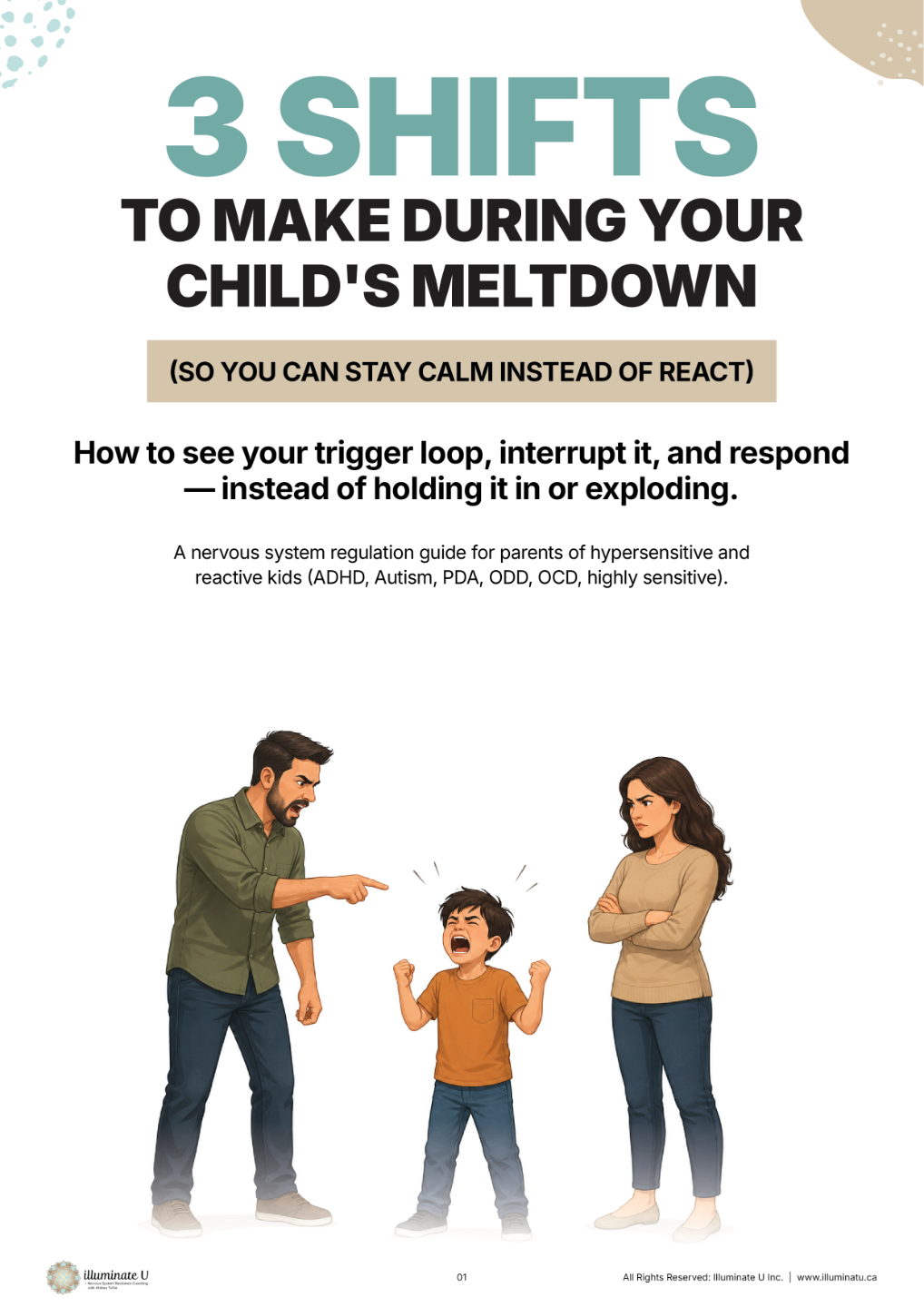
Free: The 3 Shifts Guide
The trigger loop and 3 patterns you get stuck in during meltdowns — and how to shift them so you can stay calm instead of react.
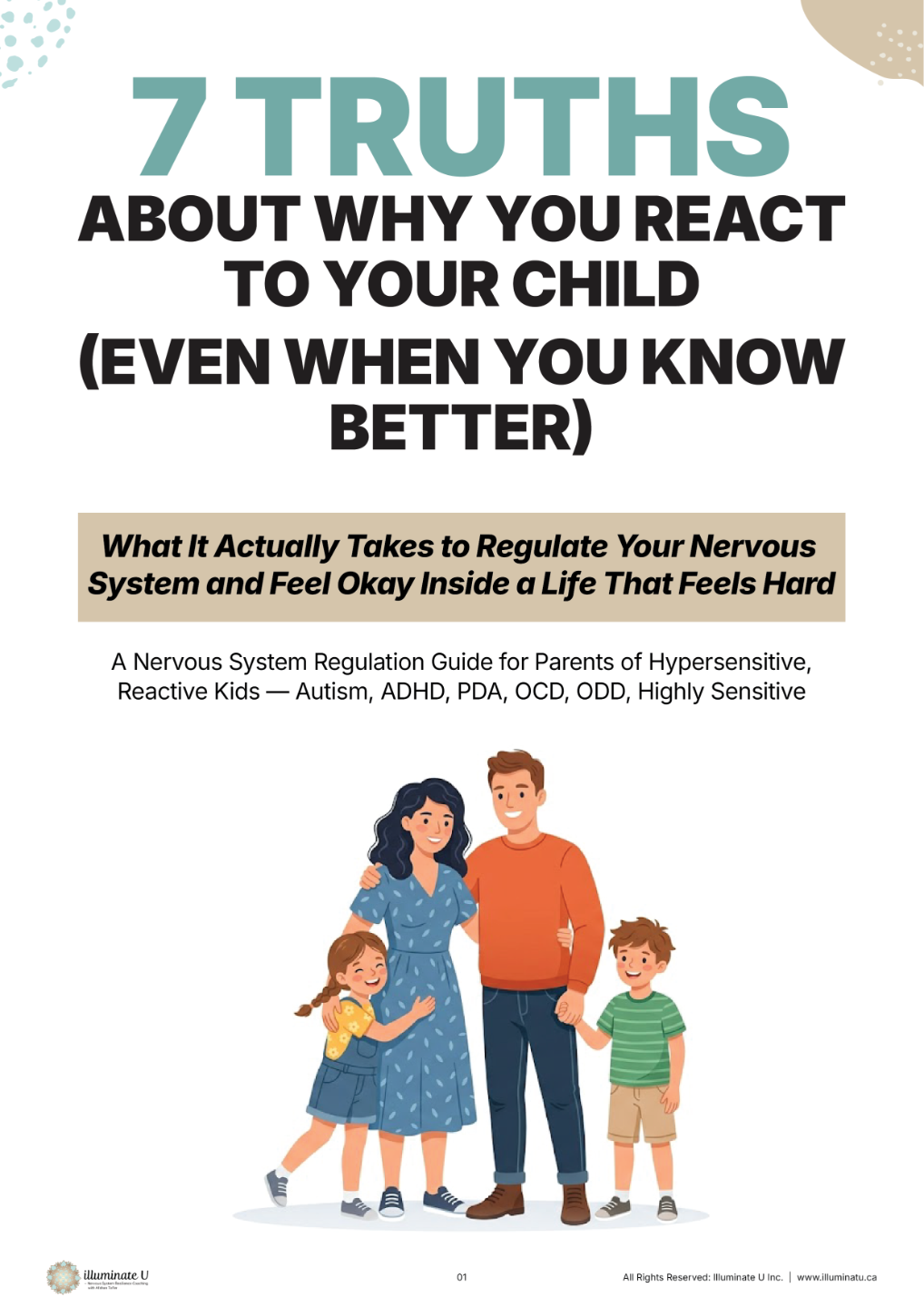
Free: 7 Truths About Why You React to Your Child Guide
Why you react even when you know better — the conditioning, nervous system states, hidden beliefs and patterns, and buried emotions running the show.

