
Breaking the Anger and Rage Cycle in PDA & Autistic Parenting
**You can also listen to this in audio format only on The Regulated Mother Podcast on Apple or Spotify. Look for Episode #40
**Below is the blog article for easy reading.
Why Do I Snap After Trying So Hard to Stay Calm?
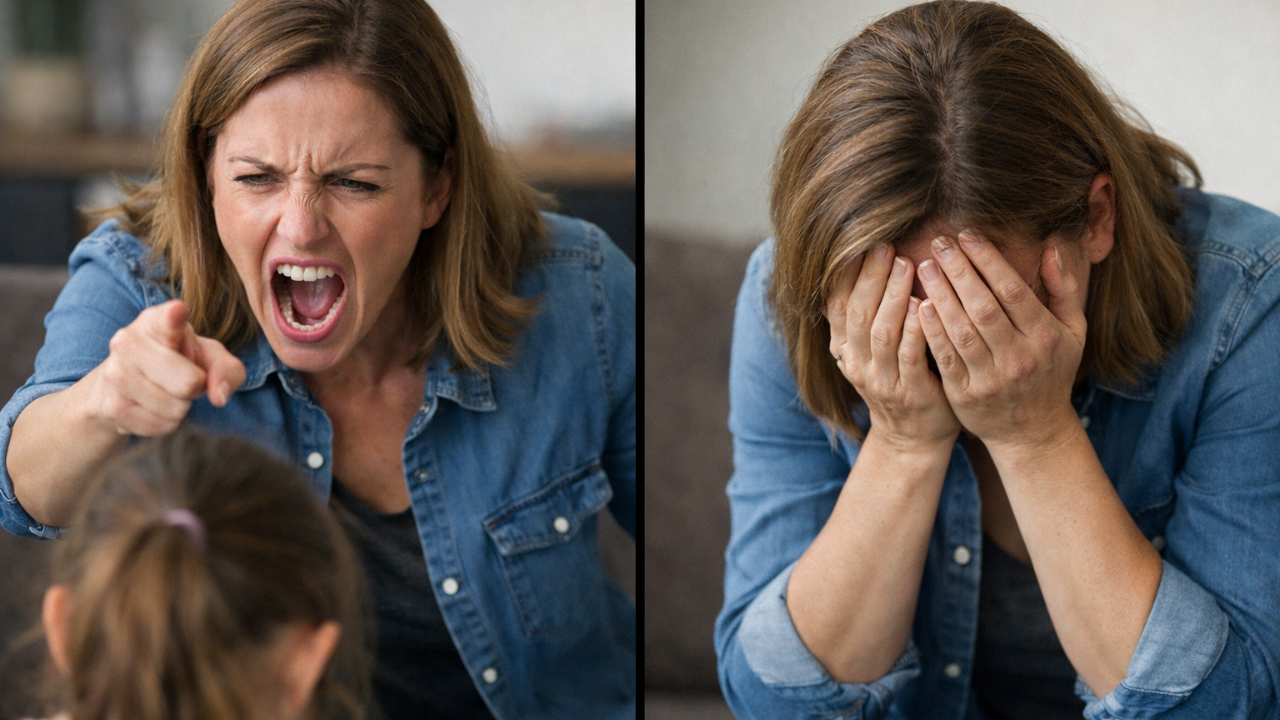
Have you ever had a moment with your child where you completely lose it…
Where you’re yelling, your body feels out of control, and it’s like something takes over you…
And then just minutes later, you’re sitting there thinking:
What is wrong with me?
If you’re parenting a PDA or autistic child, you probably know exactly what I’m talking about.
The long days of co-regulating…
The constant demands…
The pressure to stay calm…
And then suddenly—
you snap.
And what makes it even harder isn’t just the rage.
It’s what comes after.
The shame.
The guilt.
The fear that you’re damaging your child.
And the promise you make to yourself:
“Next time, I’ll do better.”
But then it happens again.
And you start to wonder…
👉 Why does this keep happening?
👉 Why does it feel so intense?
👉 And why can’t I seem to control it?
In this episode, I want to show you something really important:
This is not a personal failure.
This is not because something is wrong with you.
This is a nervous system pattern.
And once you understand what’s actually happening underneath your rage…
You can begin to work with it in a completely different way.
Not by trying harder to control yourself—
But by understanding the cycle, building capacity, and learning how to move through that energy safely.
So if you’ve ever found yourself stuck in this rage → shame → repeat loop…
This episode is going to help you make sense of it—
And more importantly…
help you begin to change it.
The Moment I Lost It
I remember one night so clearly.
It had already been a long day of co-regulating my son. We were in a phase where we were trying out low demand parenting, offering a lot of accommodations to help him stay regulated. And while I could understand why this approach was needed, my nervous system often felt completely taxed by it.
All day, I was trying to stay calm. Trying to meet his needs. Trying to hold everything together.
There were moments where he would escalate — banging things, becoming more intense — and I would feel my body startle. But I would just hold it all in. I would keep functioning, keep going, trying to get through the day.
Underneath it all, I felt pushed. I felt like I had no power in the situation.
And if I’m really honest, I also felt fear. His escalations could become so extreme at times — things in the house getting damaged, episodes lasting for hours — and my system had learned to just keep accommodating in order to prevent it from getting worse.
So that night, I was doing the best I could.
And then bedtime came.
He didn’t want me to sleep. He wanted me to stay with him longer. So I stayed.
Then it was 1am. Then 2am.
I was still trying to stay calm. Calm… calm… calm…
But inside, something was building.
I didn’t want to be controlled. I wanted to sleep. But at the same time, I felt so much pressure to be what he needed.
It felt like all of his demands, all that pressure, had been building inside of me all day long.
And then he threw a glass bottle and it shattered across the floor.
And there I was, at 2am, completely exhausted, having to clean it up.
And something in me just snapped.
I lost it.
I yelled. I made those ugly, animal-like growling faces. I could feel the rage completely take over my body.
And then… just like always…
I collapsed into a pile of shame.
Hating my life.
But more than anything, hating myself for not being able to control this reaction.
The Cycle So Many Parents Get Stuck In
One of the hardest things to work through as a parent is the shame spiral that follows moments like this.
Because what we experience in those moments is not just frustration or even just anger. It is intense fight energy that can feel completely out of control.
It can feel like you have lost yourself. Like you are behaving in ways that don’t match who you want to be or your values. And in those moments, it can genuinely feel like you have become someone else — someone you don’t recognize.
And then the aftermath comes.
The shame.
The self-judgment.
The belief that something is wrong with you.
Many of us have been conditioned to believe that being a good, worthy, respectable human being means being in control of our emotions. So when we find ourselves acting in ways that feel “out of control,” it doesn’t just feel like a bad moment — it feels like a reflection of who we are.
So we try to fix it.
We tell ourselves we need to try harder.
We clamp down more on the anger.
We push it away.
And for a while, it may seem like it’s working.
But underneath, the pressure is still building.
Because what we are doing is trying to control something that is not meant to be controlled — instead of understanding what is actually happening and learning how to work with it.
And so the cycle continues.
What’s Actually Happening in the Nervous System
From a nervous system perspective, anger and rage are not a personality flaw or a mental health challenge. They are defensive reactions that happen automatically when the system detects danger and cannot resolve it through connection or what’s called our “social engagement system”.
At first, we try to solve a stressor by using our more regulated and connected state. We try to talk calmly, help our child, co-regulate, and solve the problem.
But when that doesn’t work, something begins to shift internally.
The nervous system starts to register that this situation is not resolving. And at some level, it begins to feel unsafe.
At that point, the system moves into survival responses. It mobilizes energy to either fight or flee.
But this is where parenting creates a unique bind.
You cannot flee — this is your child.
And you do not want to fight your child.
So the system does something very important.
It overrides those impulses and goes into a freeze response.
This freeze response is not calm. It is a state of holding. Of clamping down. Of trying to contain all of that fight and flight energy inside the body.
You keep going. You keep functioning. You keep holding it all in.
But the energy doesn’t go away.
It builds.
And when the system can no longer contain that level of activation, it shifts into what we can call defensive rage — a last attempt to resolve the perceived threat and restore safety.
Why It Feels So Fast and Out of Control
Many parents say, “It just came out of nowhere.”
But what is actually happening is the opposite.
The system has been holding and holding for a long time.
Because you are in freeze, you are not fully feeling the build-up. The energy is being clamped down, outside of conscious awareness.
So when it finally breaks through, it feels sudden.
But in reality, it has been building underneath the surface.
This is why it can feel so intense and so fast — because it is not just the moment. It is the accumulation of everything that has been held in.
And when it releases, it can even feel momentarily relieving. There can be a sense of power, or a discharge of energy that feels almost good for a brief moment.
But that is quickly followed by a drop into shutdown — into shame, collapse, and self-judgment.
The Role of Trauma and Past Experiences
This pattern becomes even more intense when past trauma is triggered, which is almost always the case in these situations.
When your system feels like it cannot fight or flee and the freeze state gets triggered to hold it all in, this often mimics earlier traumatic life experiences of powerlessness and no escape.
Experiences where you:
- couldn’t say no
- felt trapped
- had no choice
- were not heard
- were not safe
In those moments, your fight or flight responses were not able to complete.
That energy remained in the system.
So when a current situation — like your child’s behavior — recreates a similar internal feeling state, the nervous system does not just respond to the present moment.
It responds to the past as well.
It tries to:
- protect you from feeling those same overwhelming emotions again
- and complete the defensive responses that never got to finish
And this is why the reaction can feel so disproportionate to what’s actually happening in the present, and so overwhelming.
Anger and Rage as Protective Responses
Another important piece to understand is that anger and rage are not only fight responses — they are also protective of something deeper. They often show up to protect us from feeling more vulnerable emotions underneath.
For many of us, it is much easier to feel anger than it is to feel:
- deep grief and sadness
- shame
- fear or terror
So rage comes in as a kind of shield.
It protects us from having to fully experience those deeper layers.
The less tolerance and capacity we have for these vulnerable emotions, the more we will experience anger to protect us from feeling them.
My Own Pattern Beneath the Rage
For me, my rage was deeply connected to earlier experiences where I felt:
- unable to say no (because I had to be a good little girl who was always compliant in order to get love and approval)
- trapped and without choice (we often feel this in childhood)
- like I was going to die (from a near-death experience at one year old)
- ashamed of my anger (because of the messaging I got when I was angry as a child)
- unheard and powerless (from medical trauma in childhood)
So when my son’s behavior created a sense of pressure — of being demanded of, of not having space, of not being able to say no — my system would respond in a very specific way.
I would hold it in.
And hold it in.
And hold it in.
Until eventually, it would explode.
At the time, I didn’t understand why my reactions felt so extreme or why they seemed to take over so suddenly.
But what I came to understand was this:
There was nothing wrong with me.
My system was doing exactly what it had learned to do.
It was trying to protect me from overwhelming emotional states from the past, and at the same time, it was trying to complete defensive responses that had never been allowed to finish.
The Shift: From Control to Capacity
The biggest shift for me came when I stopped trying to control my anger and started learning how to work with it.
Because this is not something that changes through willpower or discipline.
It changes through building capacity in the nervous system to feel these intense emotions and energy, and stay with it, while bringing cues of safety and choice to it.
What Helps To Break Free From Chronic Anger And Rage Patterns
This process was layered and took time.
First, I had to learn how to come back into my body. To notice sensations. To build what’s called interoception — the ability to notice and interpret signals coming from the body.
Because before that, I was often disconnected from my body. I wasn’t aware of what was building inside of me until it was already too much.
This is what most people don’t understand.
We think we can rely on quick hacks to stop rage in the moment. But if you can’t feel what’s happening in your body as stress is building, you will always miss the early signals — and by the time you notice it, you’re already overwhelmed.
So the skill of interoception — and becoming more comfortable being in your body and feeling what’s there — is foundational to this work.
Then I had to build tolerance — the ability to be with intense, uncomfortable sensations and emotions without becoming overwhelmed or shutting down.
Tolerance is a key part of becoming a regulated human.
But what many of us do instead is try to replace tolerance with control.
We clamp down. We suppress. We override what we feel.
And while that might look like control on the outside, internally it is actually building more pressure in the system.
So it’s important to understand the difference:
→ Tolerance allows the energy to be felt and move.
→ Control tries to shut it down and contain it.
And over time, control is what leads to explosion.
I also had to change my relationship with anger itself. Through psychoeducation, self-compassion, and a lot of forgiveness, I began to see that anger was not something to be ashamed of — and it was not something that defined me.
A big part of the work was learning how to stay with the intense energy of anger or rage — the urges to yell, to grab, to react — without acting them out on my child.
Instead of clamping down on that energy, I learned how to let it move safely through my body.
This was a huge shift.
Because the goal wasn’t to get rid of the anger — it was to work with the energy so it didn’t have to come out in harmful ways.
At the same time, I had to learn how to support the more vulnerable emotions underneath.
Because when those emotions — like grief, shame, fear, or powerlessness — felt seen and supported, the rage didn’t need to come in as strongly.
And over time, the intensity of the rage decreased significantly.
And perhaps most importantly, I began to rebuild a felt sense of choice.
To feel, in my body, that:
I was not trapped.
I had agency.
I could say no.
And that shift alone changed how my nervous system responded in these moments.
What This Looked Like in Real Life
In real life, this meant learning to catch activation earlier — noticing the frustration, the pressure, the urge to say no — before it built into something overwhelming.
At those earlier stages of the anger building, I would work with the energy more gently. I might push my arms against a wall while imagining saying “no,” helping my body feel that sense of boundary. I might shake out my body, or ground my feet and orient to the room to remind my system that I was safe in the present.
When activation got too big I would either use tools to help discharge that energy from my body and/or use distraction techniques to help my frontal lobe come back online and stop engaging in the survival story that was feeding the reaction. I would grab an ice pack and put it on my face to help interrupt the pattern and shift my state. I would do full body shake offs while naming an animal for each letter of the alphabet or while doing push-ups against the wall. I would make a deep “VOOO” sound (like a fog horn) to activate my vagus nerve and help get some of the yelling energy or urge to say NO out.
The key was staying out of the story and working with the body. Because the body is the faster pathway to helping the nervous system feel safe again.
Over time, this helped my system learn that there was another way to move through these states — that I was not stuck, and that I had options.
The Deeper Work of Meaning and Beliefs
As I continued this work, I also had to look at the meanings my mind was making.
There was a deep internal conflict I was living in:
If I gave my son what he needed, I felt like I was losing myself.
If I gave myself what I needed, I felt like he would suffer.
This created a constant sense of being trapped.
Part of my healing was learning to step out of that internal bind and reconnect with a sense of choice — recognizing that both of us mattered.
I also had to work with the beliefs about what my son’s challenges meant about my life — beliefs that my life was over, that everything had been taken from me, that I couldn’t be successful in life if he was this way.
And slowly, I began to shift those meanings and find space for purpose, growth, what I was gaining from these challenging experiences, instead of just what I was losing. This helped me turn pain into purpose and feel even more empowered on this journey.
Embracing Compassion Instead of Punishment
Another important part of this journey — of changing the deeper patterns that fuel anger and rage — was learning how to meet myself with compassion instead of punishment.
Because the truth is, on this path, you will get triggered.
And there will be moments where you lose it.
That is part of the process.
And when it does happen, what matters most is not what just happened —
but what happens next.
For me, this meant learning how to turn toward myself with compassion, instead of turning against myself with judgment.
To understand that what just happened was a nervous system response — not a reflection of my worth as a parent or as a human being.
Because when we stay stuck in shame, self-judgment, and punishment, we don’t actually change the pattern.
We reinforce it.
We keep the nervous system in a state of threat, which makes it more likely that the cycle will repeat.
But when we bring in compassion — even after the hardest moments — we create the conditions for the nervous system to settle, to repair, and to come back to safety.
And that is what begins to break the cycle.
A Place to Begin
If you are in this pattern, start with awareness.
Notice when the activation begins to build. Catch it earlier if you can.
See if you can pause and drop the story, even for a moment, and bring your attention to your body.
From there, allow some movement — gentle, intentional movement that helps the energy shift without overwhelming your system.
This might look like shaking, pushing against the wall, making a growling or Vooo sound, or even using simple distraction techniques along with movement to interrupt the escalation (like naming a food for each letter of the alphabet).
The goal is not to get rid of the energy, but to help your system move through it safely and help it to discharge from the body, while re-engaging your higher thinking brain (frontal lobe) to come back online.
Nothing Is Wrong With You
If you’re feeling really guilty and ashamed of your anger and rage episodes toward your child, I get it…I’ve been there…And, I want you to really take this in.
There is nothing wrong with your anger. There is nothing wrong with your rage.
It makes sense.
It is your nervous system trying to protect you.
And when you begin to understand it — and work with it instead of against it — the pattern can begin to change.
I also want to say that this is not about becoming a perfectly calm parent.
It is about rebuilding a nervous system with more capacity, more flexibility, and more support that you can bring to yourself — so that you can meet the reality of your life with greater steadiness and choice.
And this is something that can be learned.
Free: The 3 Shifts Guide
The trigger loop and 3 patterns you get stuck in during meltdowns — and how to shift them so you can stay calm instead of react.
Free: 7 Truths About Why You React to Your Child Guide
Why you react even when you know better — the conditioning, nervous system states, hidden beliefs and patterns, and buried emotions running the show.

